|
Friday, September 23, 2011
Newsletter from the Oratory


Photos of Fog
LESS THAN A WEEK ago, I remembered the dense fog of northern California. “We never get that kind of fog in Saint Louis,” I thought. But providentially, the weather forecast predicted heavy fog over large parts of the Midwest. So I got up before dawn and took my camera to shoot some pictures.
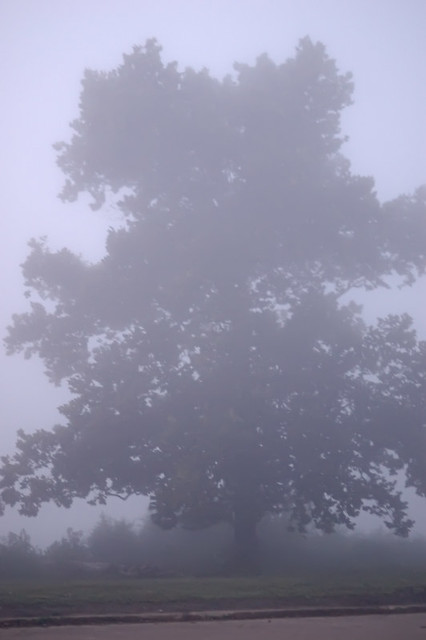
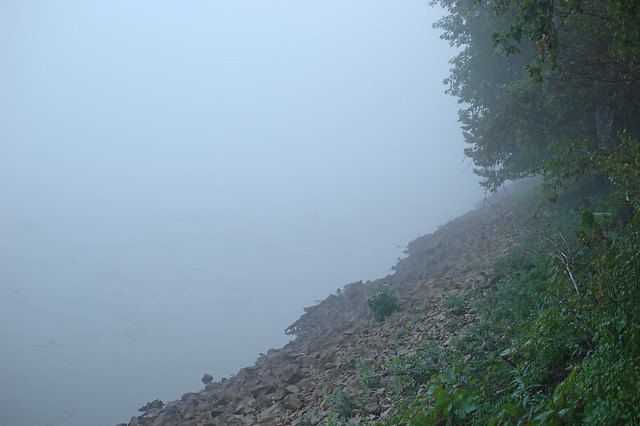
At North Riverfront Park in Saint Louis.
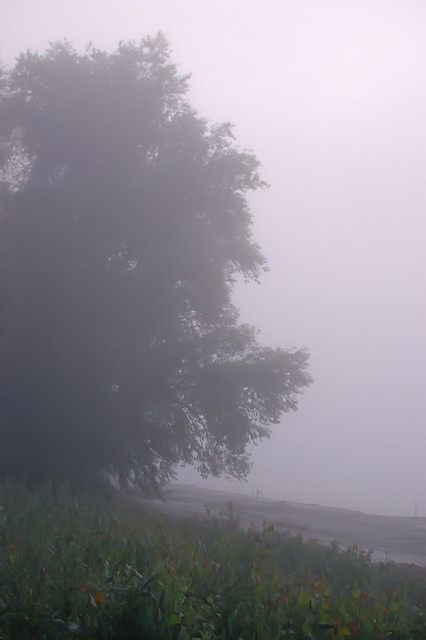
Photography within fog does not obey the rules of the photographic Modernists: sharpness, great depth of field, and precise focus are impossible and pointless. Rather, we follow the earlier Pictorialist photographers, seeking strong composition and an emotional or even a spiritual approach to our subject.
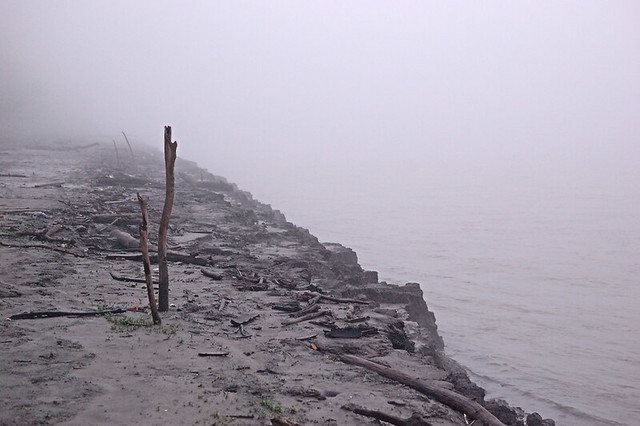
Fog shrouds large things, like the greatest river in North America in this photo, or huge mountain ranges; it can also cover things of practical importance, like an oncoming vehicle on the road.
Fog is a natural symbol of unknowing, of the heavy veil that separates our experience and knowledge from reality. Sharp edges are lost, colors are muted, and our view is severely limited.
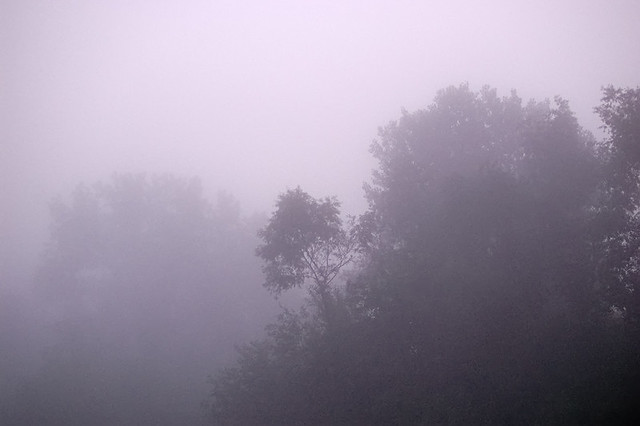
Fog is a cloud that has settled or has formed on the ground. Normally clouds have no obvious scale, they appear to be floating beneath a heavenly dome to which are affixed the stars, and so could be any distance away: our eyes give us little clue.
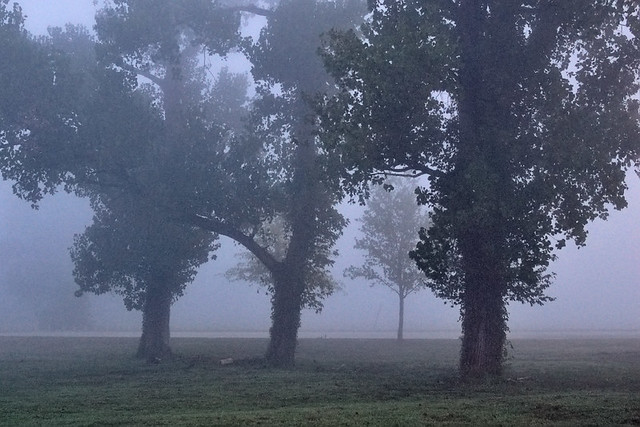
But when fog settles near the ground, you can sometimes reach up and touch that cloud's base, or even stand above it if it is not too thick. Within the cloud, your senses are confused: you cannot see far, your hearing is muffled, and the odor of the cloud itself, the humidity, fills your nostrils and you can even taste it and feel it.
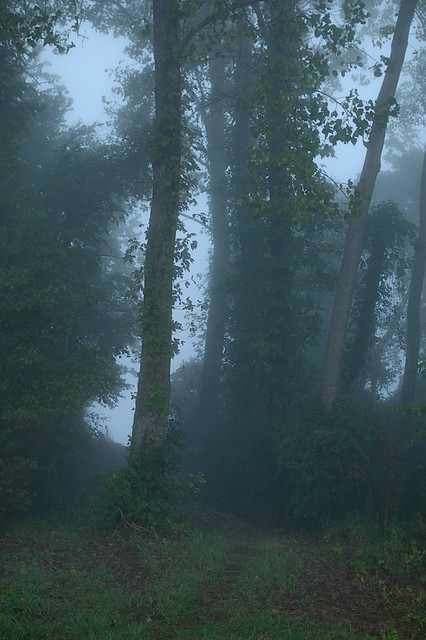
At Columbia Bottom Conservation Area, located at the confluence of the Mississippi and Missouri Rivers.
Clouds are a symbol of divinity. God leads the Israelites as a pillar of cloud. The glory of God, shrouded by clouds, settles on Mount Sinai and on the Tabernacle. Mist, mystically speaking, is a symbol of the intersection of the divine and earthly.
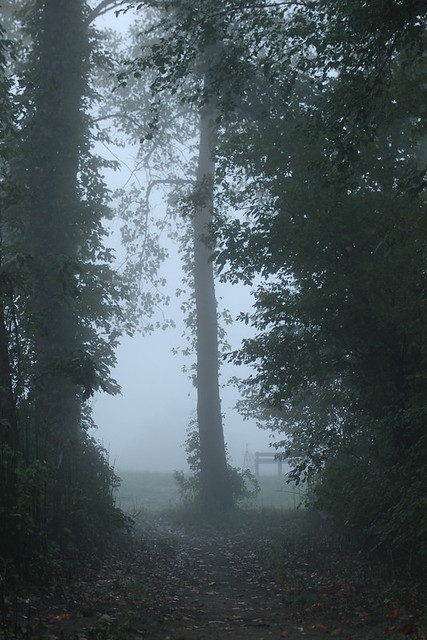
In Sacred Scripture, clouds veil God from our sight, and are also a symbol for God's gifts: as rain from the clouds relieves a parched land, so grace refreshes our souls.
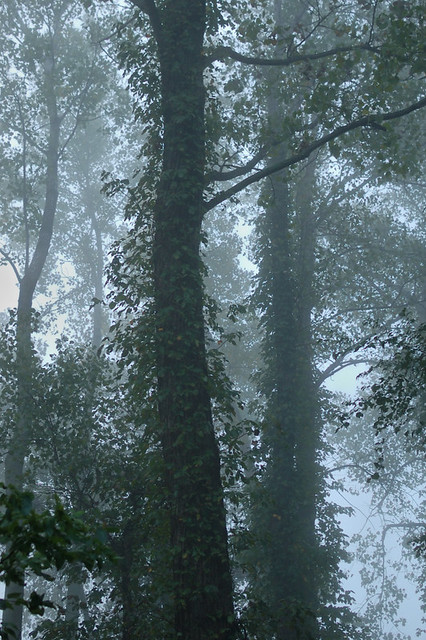
In fiction, the symbolism of fog can be used to good effect. The hard-boiled detective Sam Spade in San Francisco, and Sherlock Holmes in London, both seek out the answers to mysteries in the dark and the fog.
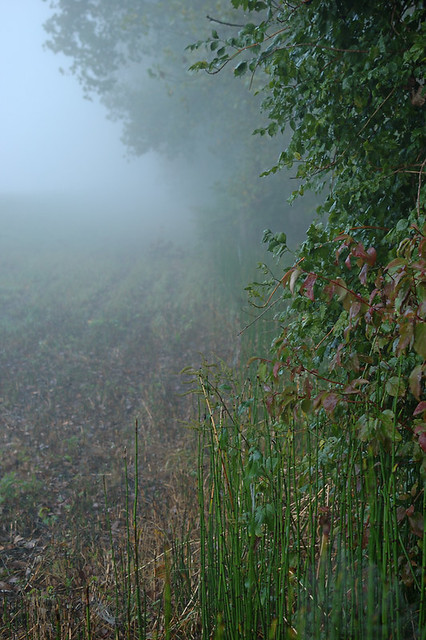
In more romantic styles of fiction, fog can have a presence, almost if it were a character in the story. What lurks nearby, unseen?

It is said that climate shapes character, as well as philosophy. The ancient Greeks preferred bright days of sunshine, and likewise their high philosophy is seen as being overly optimistic at man's ability to shape history and approach divinity. Northern stories and philosophies, set amid the cold and fog, tend to be more pessimistic, more dependent on unalterable fate.
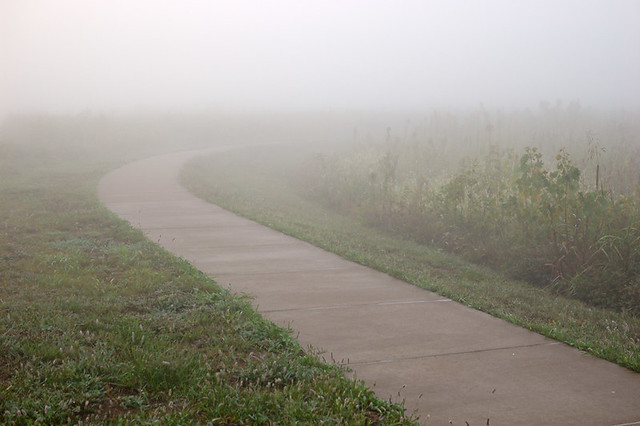
There is a common contemporary philosophy that does not want to approach mystery. Especially when it comes to religion, this view accepts mysteries such as the Holy Trinity, but does not attempt to go deeper into them. Rather, these philosophers concentrate on practical matters, such as politics.
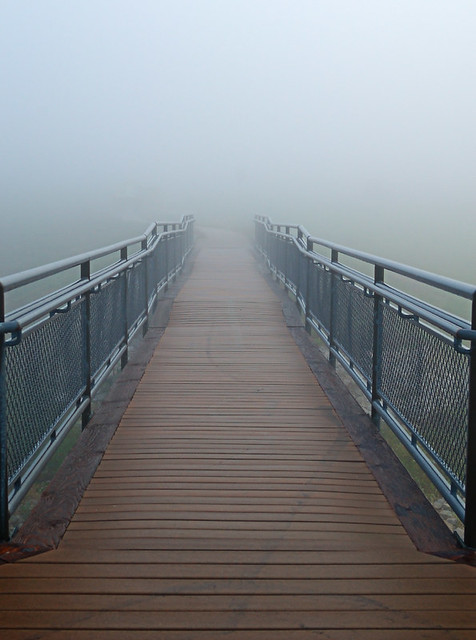
It is true that a fog restricts our vision, and the fog of divinity likewise veils our theology. As Saint Paul writes, we see through a glass, darkly. But to a traveler who must reach his final destination, fog must be navigated whether he wants to or not, despite his own personal standards for acceptable visibility.
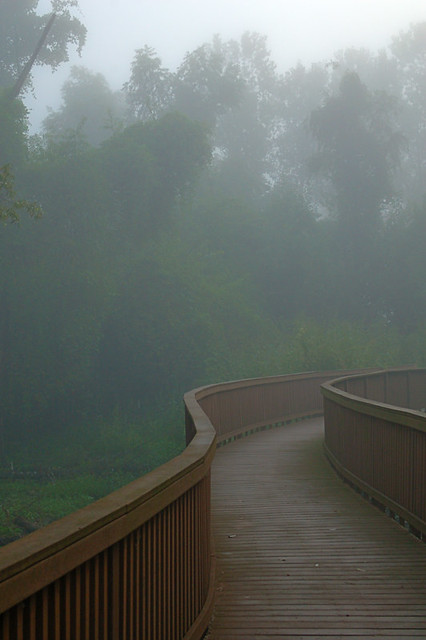
And so likewise, we must navigate the fog of divinity if we want to reach our final destination. As Christians, we ought to humbly accept Revelation, as a driver must rely on his roadmaps when traveling though unknown territory.
Wednesday, September 21, 2011
Monday, September 19, 2011
"Theological Aspects of Beauty and Art"
MEET ME this Friday, when I talk about art and beauty:
SPEAKER SOCIAL
September 23
Doors Open 6:30 pm / Speaker Begins 7:00 pm
MARK SCOTT ABELN
"Theological Aspects of Beauty & Art"
|
Please j
 oin us this Friday, when Mark Abeln, speaks to us on Catholic tradition in art (classical and medieval), the virtue of art, and the traditional definitions of art and beauty. oin us this Friday, when Mark Abeln, speaks to us on Catholic tradition in art (classical and medieval), the virtue of art, and the traditional definitions of art and beauty.
A native St. Louisan and Catholic convert, Mark Abeln is a professional photgrapher, and has also been writing about Catholic culture since 2004 in his online blog, Rome of the West. While taking photos of some old churches, Mark became aware that his poor-qualtiy photos did not do justice to these worthy subjects, and so he was inspired to learn the art of photography, and the role of religion in contemporary culture. This ultimatey culminated in the publication of Fr. William Barnaby Faherty's book Catholic St. Louis: A Pictorial History, which featured hundreds of Mark's color photographs of area churches.
Coffee, Cappuccino, Espreso & More!
Catholic St. Louis: A Pictorial History
will be available for purhase!

No Cost - Goodwill Offering Appreciated!

Woodstone Plaza
636-447-6000
|
Photos of Immaculate Conception Church, in Saint James, Missouri
HERE ARE PHOTOS of Immaculate Conception Church, in Saint James, Missouri. The church is located in Phelps County, and is about 97 miles southwest of downtown Saint Louis on Interstate 44. It is part of the Diocese of Jefferson City.
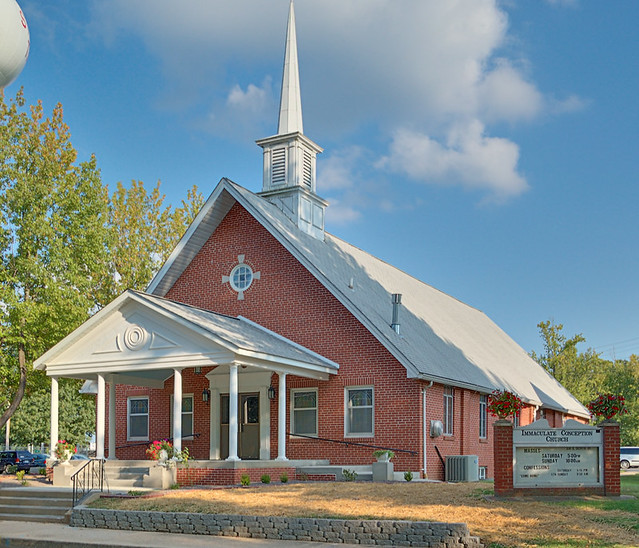
The parish was founded in 1870, and is made up about about 190 families.
The town of Saint James is not named after the Greater or Lesser Apostles of Our Lord, but rather after the James family, who owned an iron mine and smelter southeast of town. The remains of the ironworks can be found at the Maramec Spring Park. Saint James is located on Big Prairie; prior to European settlement, this area was frequented by the Shawnee tribe who had a cemetery here. The town of Scioto was laid out in 1859, being renamed Saint James the next year.
This region was settled by Italian immigrants in 1898, who set up a significant wine and grape industry. There a number of fine wineries nearby.
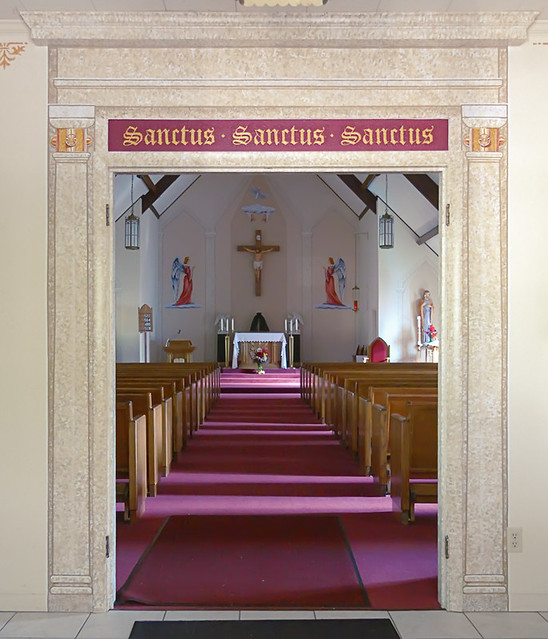
Sanctus, Sanctus, Sanctus: Holy, Holy, Holy.
The church was locked, but I was able to get this photo through the door.
Address:
316 East Scioto Street
Saint James, Missouri 65559
Subscribe to:
Posts (Atom)
