Pages

Monday, March 16, 2009

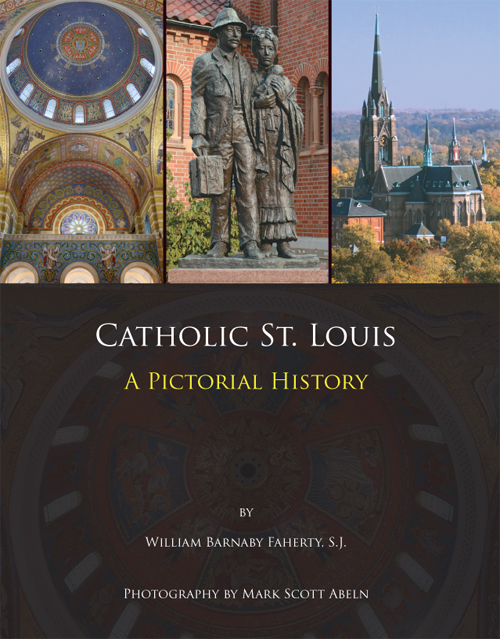
Catholic St. Louis: A Pictorial History

Catholic_cover_final_rev

Catholic St. Louis: A Pictorial History
By William Barnaby Faherty, S.J.
Photography by Mark Scott Abeln


The history of the Catholic Church in St. Louis is dominated by strong personalities and architectural grandeur. In Catholic St. Louis: A Pictorial History, rich text and photography capture the people and places that have defined Catholicism in a historic, and historically Catholic, city. Renowned historian William Barnaby Faherty, S.J., delivers concise historical sketches of the integral people and the landmark houses of worship; and photographer Mark Scott Abeln captures nearly forty different area churches in majestic fashion. From the eighteenth-century Holy Family Church in Cahokia to the overwhelming Cathedral Basilica to the modern St. Anselm’s in Creve Coeur, St. Louis’s churches are significant, not to mention spectacular. This coffee-table book truly presents Catholic St. Louis in all its splendor.


BIBLIOGRAPHIC INFORMATION

May 2009     9781933370835
$32.95           8.5 x 11
176 pages      Trade Cloth


THE AUTHOR

William Barnaby Faherty, S.J. has written more than 40 books, including dozens of books on St. Louis history and the novels Call of Pope Octavian and A Wall for San Sebastian.

Reedy Press, LLC
PO Box 5131 | St. Louis, MO 63139
P: 1.866.809.9420 | F: 1.866.999.6916 | www.reedypress.com


Over half the photographs were taken specifically for this book and have never been seen before, and all of the rest have been digitally remastered at full resolution for print.


Photos of the former Christian Brothers College High School, in Clayton, Missouri

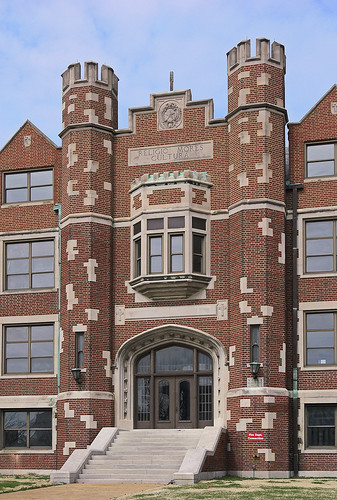
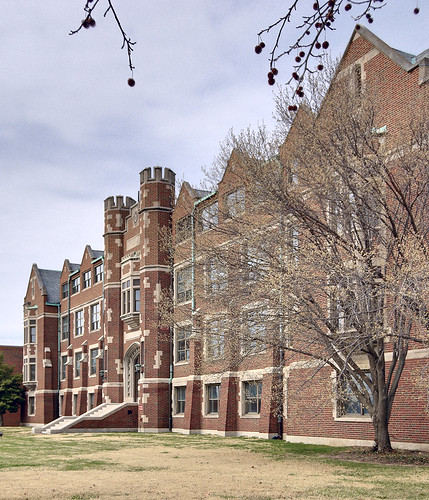
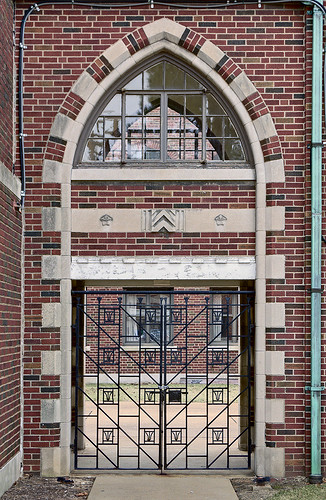
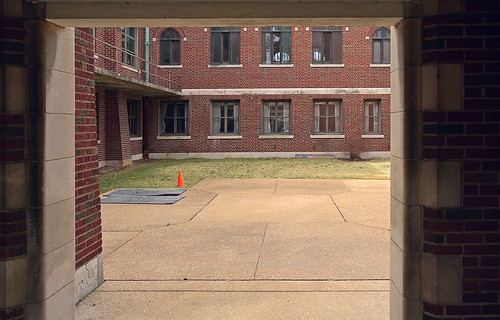
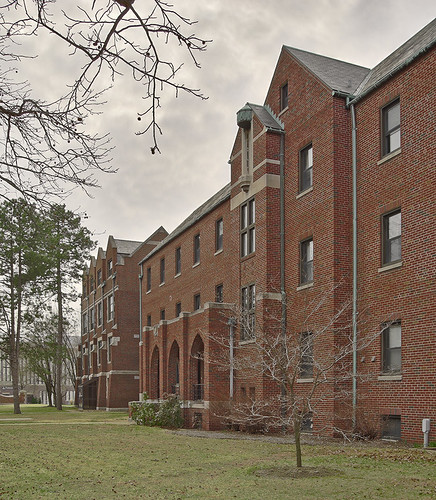
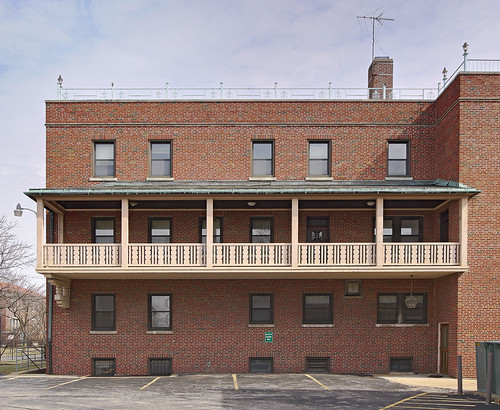
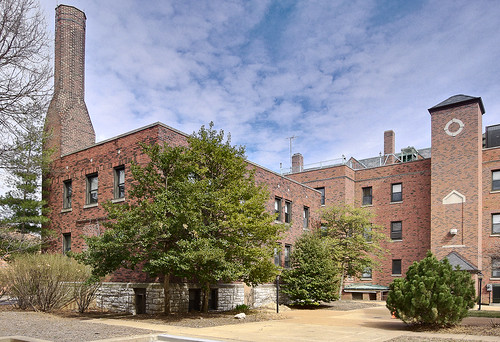
THE CHRISTIAN BROTHERS COLLEGE High School was started in 1850 and since 2003 has been located in the upscale suburban community of Town and Country. This photo essay shows the former CBC school in Clayton, Missouri which was in operation from 1922. The school building has changed hands several times since it closed, having been purchased by nearby the Lutheran Concordia Seminary and by Washington University. Now there are rumors that this school will be torn down to build a school for the Clayton public school district.

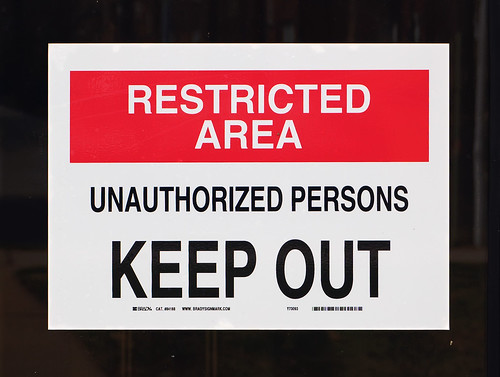
The former Christian Brothers College High School, in Clayton, Missouri, USA - Keep Out

A sign on a door into the building.  KEEP OUT.

The former Christian Brothers College High School, in Clayton, Missouri, USA - front door

A cross, formerly above the main door, has been removed, while the lettering underneath has been retained: RELIGIO - MORES - CULTURA.

The first CBC High was at 8th and Cerre Streets in downtown Saint Louis (now a parking lot and tavern); due to industrialization of the area, the school moved in 1882 to the corner of Kingshighway and Easton (now Martin Luther King Drive) on the site of the old Côte Brilliante Indian mound; this opulent and famous school burned to the ground in 1916 and the school moved to former farmland in Clayton, the county seat of Saint Louis County. As students continued to move further westward, the school relocated once again to its present site at the northwest corner of Interstates 270 and 64.  Click here for photos of the new school.


The former Christian Brothers College High School, in Clayton, Missouri, USA - exterior front

This building's architect was Henry P. Hess (1884-1957), who worked for three years under William B. Ittner; Hess also designed the Rosati-Kain High School, the Kenrick-Glennon Seminary, All Saints in University City, Immaculate Conception in Maplewood, Saint Mary of the Barrens Seminary, in Perryville, Missouri, as well as other churches. Hess' firm is now known as LePique & Orne Architects.

Hess was Cardinal Glennon's favorite architect, and in the course of his long career designed about 700 schools.

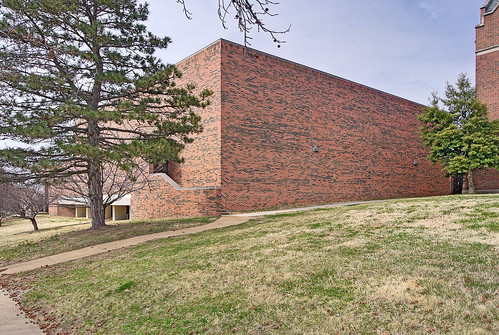
The former Christian Brothers College High School, in Clayton, Missouri, USA - gymnasium

One of the modern additions to the original building.

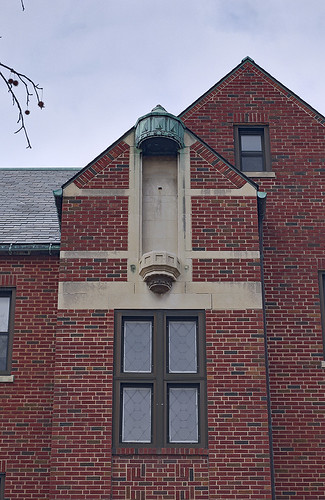
The former Christian Brothers College High School, in Clayton, Missouri, USA - empty niche on building exterior

An empty niche, which formerly had the statue of Saint De La Salle, which is now at the new campus.

The former Christian Brothers College High School, in Clayton, Missouri, USA - archway

The former Christian Brothers College High School, in Clayton, Missouri, USA - courtyard

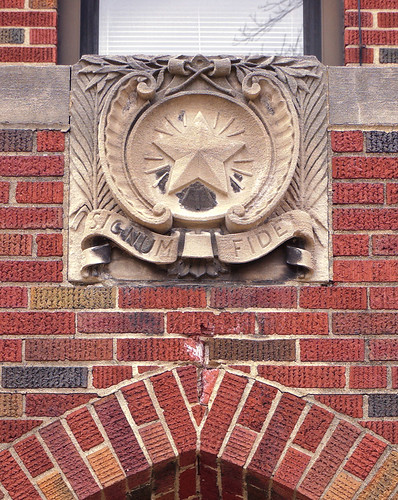
The former Christian Brothers College High School, in Clayton, Missouri, USA - Signum Fidei - Seal of the Christian Brothers

SIGNUM FIDEI and the symbol of the Christian Brothers.

The Institute of the Brothers of the Christian Schools was founded by Saint Jean-Baptiste de La Salle in 1681, who was responsible for instituting modern classroom pedagogy.

The former Christian Brothers College High School, in Clayton, Missouri, USA - exterior side

In its day, CBC was known as a tough Irish school, and all students were enrolled in the Junior Reserve Officers' Training Corps.

The former Christian Brothers College High School, in Clayton, Missouri, USA - chapel exterior

The former chapel.

The former Christian Brothers College High School, in Clayton, Missouri, USA - balcony

The former Christian Brothers College High School, in Clayton, Missouri, USA - smokestack

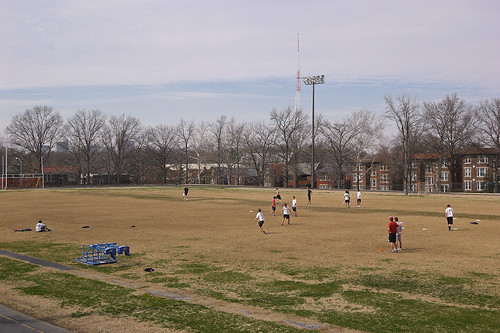
The former Christian Brothers College High School, in Clayton, Missouri, USA - athletics field

The athletic field still gets use.

Sunday, March 15, 2009

Exsurge, Domine

Arise, O Lord, and let not man be strengthened; let the Gentiles be judged in Thy sight. When the enemy shall be turned back, they shall be weakened and perish before Thy face.

— Gradual for the Mass of the Third Sunday in Lent

BEWARE....

...THE IDES OF MARCH.

The following story, too, is told by many. A certain seer warned Caesar to be on his guard against a great peril on the day of the month of March which the Romans call the Ides; and when the day had come and Caesar was on his way to the senate-house, he greeted the seer with a jest and said: “Well, the Ides of March are come,” and the seer said to him softly: “Ay, they are come, but they are not gone.

— Plutarch, The Life of Julius Caesar.
And by day's end Caesar was assassinated by a group of Senators.

The ancient Romans gave us our basic calendar, but they did not number the days as we do, but rather counted down to three days fixed within each month: the Nones, Kalends, and Ides.

The Ides (Latin: idus “half division”) is the 15th day of the month of March, May, July, and October, and on the 13th otherwise. In the very early days of Rome, the Ides was the day of the full moon (and considered auspicious), but it was quickly changed into a fixed day within each month. But the Ides of March was not auspicious for Caesar, nor for the Roman Republic.

The first day of the month was the Kalends (where we get our word calendar) and originally was the day of the new moon.

Halfway between Kalends and Ides was Nones, the day of the half-moon, and traditionally a market day.  Nones was the 7th day of the month in March, May, July, and October, and the 5th otherwise.

As mentioned, the Romans numbered the days of the month by counting down to each of these days.

For example, today, the 15th of March, is Idus Martius, or Id. Mart.

Yesterday the 14th was Pridie Idus Martius, or Prid. Id. Mart.

Other days are counted down: the 13th is ante diem III Idus Martius, or a.d. III Id. Mart.; the 12th is a.d. IV Id. Mart.

Please note how they count: just as when we tell of Jesus' three days in the tomb, we count Good Friday as day 1 and Easter as day 3, likewise the Romans counted the Ides as day 1.

Continuing to the beginning of the month:

March 11tha.d. V Id. Mart.
March 10tha.d. VI Id. Mart.
March 9tha.d. VII Id. Mart.
March 8tha.d. VIII Id. Mart.
March 7thNones Martius
March 6thPrid. Non. Mart.
March 5tha.d. III Non. Mart.
March 4tha.d IV Non. Mart.
March 3rda.d. V Non. Mart.
March 2nda.d. VI Non. Mart.
March 1stKalends Martius

Dates after the Ides count down to the Kalends, or first day, of April.

March 31st — Prid. Kal. Aprilis
March 30th — a.d. III Kal. Apr.
March 29th — a.d. IV Kal. Apr.
March 28th — a.d V Kal. Apr.

and so on.

The early Roman calendar had other oddities, such as leap months instead of leap year days, as well as calendar reforms which led to changes in dates.

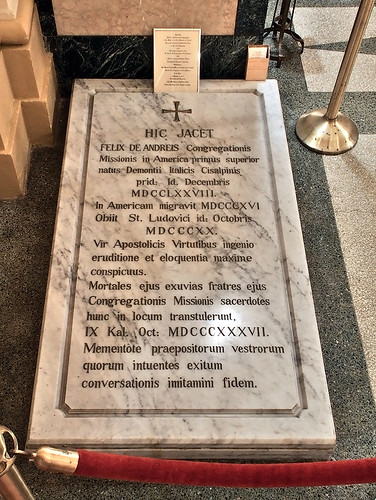
For examples of Roman dating, please see this photo of the tomb of the Venerable Felix de Andreis, at Saint Mary of the Barrens Church in Perryville, Missouri:

Saint Mary of the Barrens Roman Catholic Church, in Perryville, Missouri, USA - tomb of Felix de Andreis

I leave the translation of the dates as an exercise to my readers!


See also my post on the vernal equinox.

Saturday, March 14, 2009

Photos of Pere Marquette State Park, in Grafton, Illinois

NAMED AFTER an early Jesuit missionary, Pere Marquette State Park near Grafton is the largest park in the state of Illinois. The park is about 43 highway miles northwest of downtown Saint Louis, Missouri.

The park, 8050 acres (33 km2) in area, is located on the left bank of the Illinois River at its confluence with the Mississippi River, and is about 21 miles from the confluence of the Missouri River. Such a meeting of the rivers, long the only good means of long-distance transport, helped make this region a center of trade, travel, and settlement.
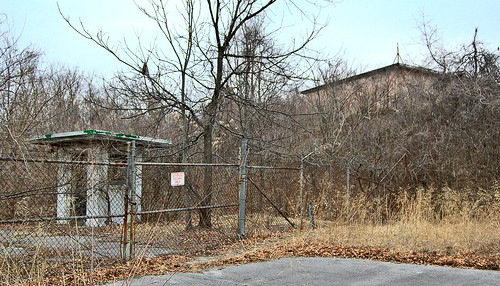
Pere Marquette State Park, in Grafton, Illinois, USA - Site superintendent's office

Site Superintendent's office.

The park is named after Jacques Marquette (1637-1675) of the Society of Jesus, who explored this area with Louis Joliet.  Some excerpts of Father Marquette's journal are here.

Père is French for 'father' meaning priest, and is pronounced like pear, pair, or pare. I often hear people mistakenly call this place Pierre Marquette. Pièrre is French for 'rock', and hence also Peter.
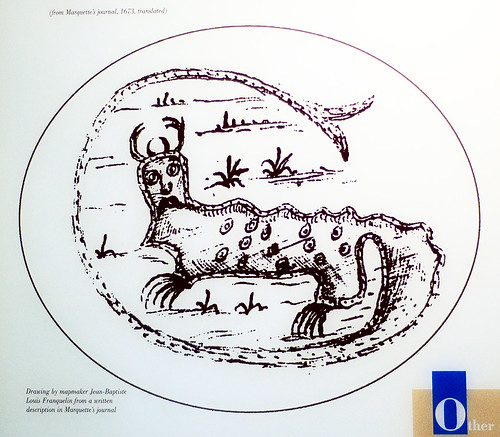
Pere Marquette State Park, in Grafton, Illinois, USA - Jean-Baptiste Louis Franquelin's drawing of the Piasa Monster

Photograph of an exhibit in the park museum.

Fr. Marquette saw paintings of monsters on the cliffs overlooking the river, and this is an early drawing of one of the monsters. These rock paintings have since disappeared. This led to the legend of the Piasa Bird; this monster has been repainted in a somewhat different style and is now used as a symbol of the nearby town of Alton, Illinois.


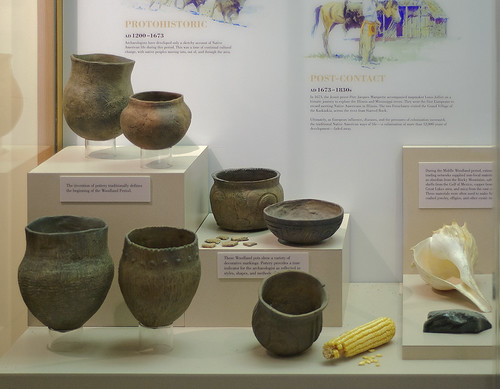
Pere Marquette State Park, in Grafton, Illinois, USA - Indian pottery of the Woodland Period

Indian pottery, of the Woodland style, also in the museum.

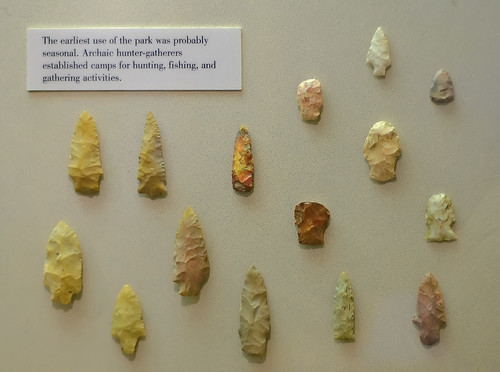
Pere Marquette State Park, in Grafton, Illinois, USA - Indian arrowheads

Arrowheads.

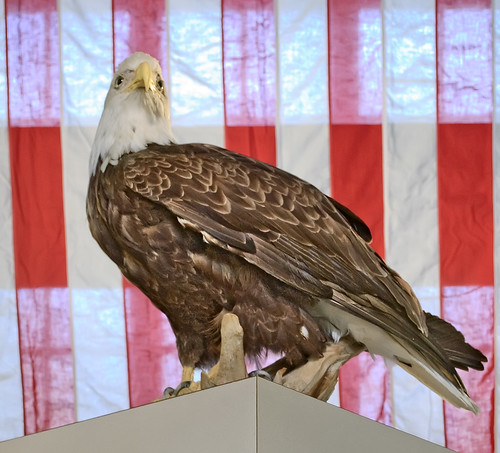
Pere Marquette State Park, in Grafton, Illinois, USA - mounted bald eagle

Pro patria.

A Bald Eagle, symbol of the United States. This species has become quite common in the river regions of Saint Louis during the wintertime, making this area popular with birders. Located on the Mississippi Flyway, a route used by migrating birds, this area has a spectacular concentration of bird species. Good places to see eagles include the dam area at Alton and the Chain of Rocks Bridge.

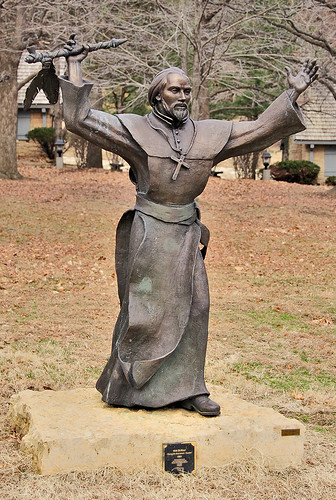
Pere Marquette State Park, in Grafton, Illinois, USA - garden statue of Father Marquette

Statue of Fr. Marquette holding a calumet, by Kirk St. Maur.

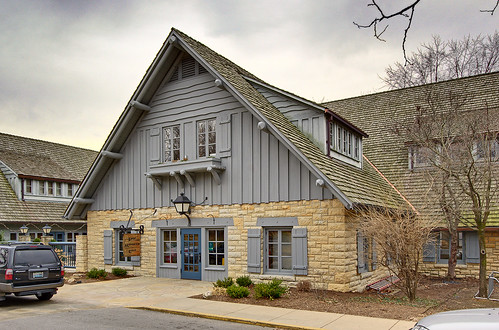
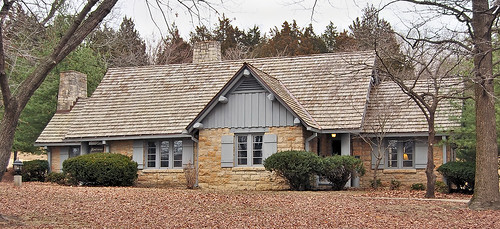
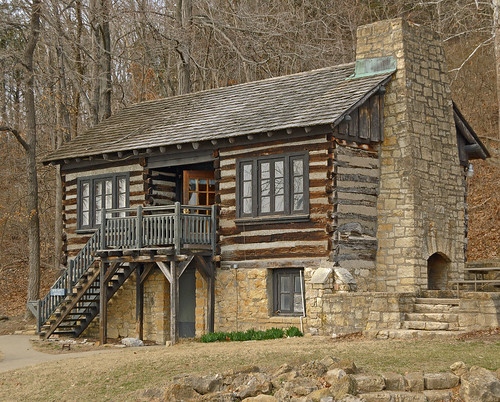
Pere Marquette State Park, in Grafton, Illinois, USA - lodge exterior

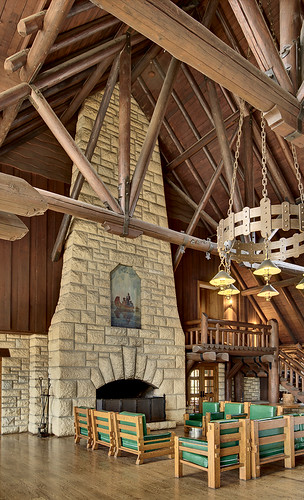
The park is perhaps best known for its rustic lodge, built in the 1930s. It is not far from the river on a terrace above flood stage, and is below a rugged ridge, making this a practical place to build something.  Archaeologists have discovered that this site was also used by the Indians.

Pere Marquette State Park, in Grafton, Illinois, USA - lodge interior

Interior of the lodge, an excellent example from what was called the "golden age of rustic design".

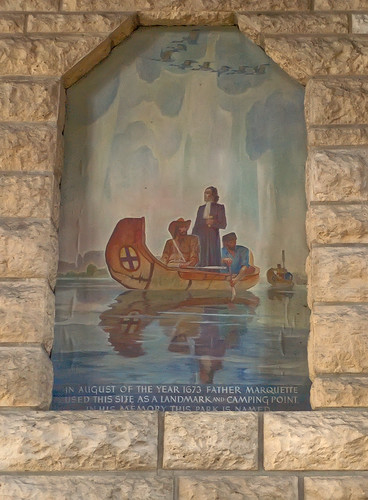
Pere Marquette State Park, in Grafton, Illinois, USA - painting of Father Marquette

IN AUGUST OF THE YEAR 1673 FATHER MARQUETTE
USED THIS SITE AS A LANDMARK AND CAMPING POINT.
IN HIS MEMORY THIS PARK IS NAMED.

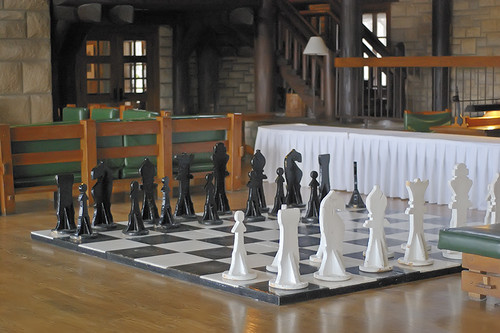
Pere Marquette State Park, in Grafton, Illinois, USA - giant chessboard in lodge

This lodge has been a favorite of my family for years.  My brother and I used to play chess on this giant board. He usually won.

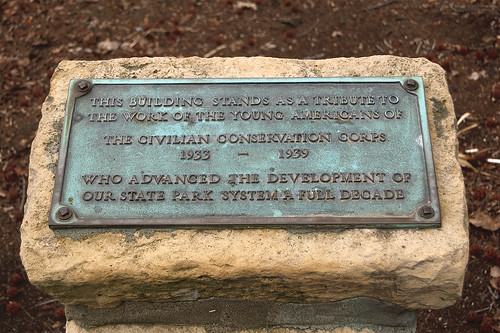
Pere Marquette State Park, in Grafton, Illinois, USA - Civilian Conservation Corps plaque

The depression-era Civilian Conservation Corps built many structures in this park, and the craftsmanship is superb. The CCC was a public relief agency, designed to relieve unemployment. Economic depression and war were the hammer and anvil which forged the “Greatest Generation” but at a severe cost.

Pere Marquette State Park, in Grafton, Illinois, USA - cabin

One of the cabins in the park.  Lodging here is typically booked far in advance.

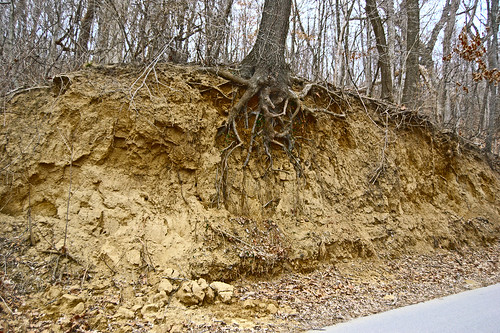
Pere Marquette State Park, in Grafton, Illinois, USA - loess soil exposed in roadcut

The park is geologically interesting.

This is a bank of loess, or fine-grained silt, which covers the ridges here. The vast glaciers that covered the region ground rock into dust, and the wind deposited the dust here. This soil does not erode easily, and occasionally people carve letters into the exposed dust.

A mountain summit in the park, McAdams Peak, was formed by extensive faulting, and the rock strata below it are tilted at severe angles, in contrast to the uniform flat rock layers nearby. At the base of the fault is Twin Springs, which lets out a trickle of water from two apertures, which provides enough warmth to allow for some green foliage to survive all year.  All this is seemingly impossible to photograph well; you have to visit it instead.

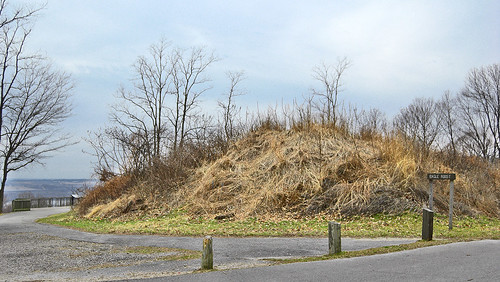
Pere Marquette State Park, in Grafton, Illinois, USA - mound overlooking rivers

A mound on the top of a ridge.  To my eye, this is most likely an Indian burial mound. It is in a lonely, but beautiful place, good for a small cemetery.

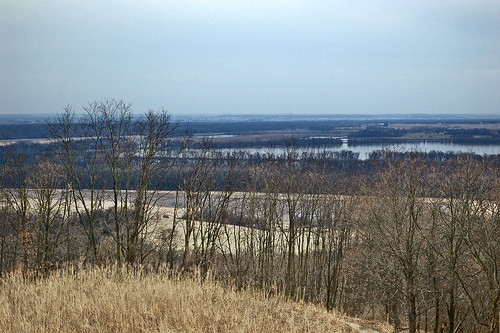
Pere Marquette State Park, in Grafton, Illinois, USA - view of the Illinois River from the top of hill

The view of the Illinois River from the base of the mound. The Illinois is a smallish river in a large valley: geologists think that the Mississippi River used to fill the lower valley, until it was relocated to the west by glaciation.

Pere Marquette State Park, in Grafton, Illinois, USA - abandoned Nike missle base

The remains of an old Nike Missile base on a ridgetop. This ground-to-air missile system, deployed around many cities of the U.S., was designed to counter bomber fleets, but quickly became obsolete.

Sorry for the poor quality of this photo. Overcast days seemingly ought to be good for photography, due to soft, even illumination, but rather those days steal color from the camera's sight.

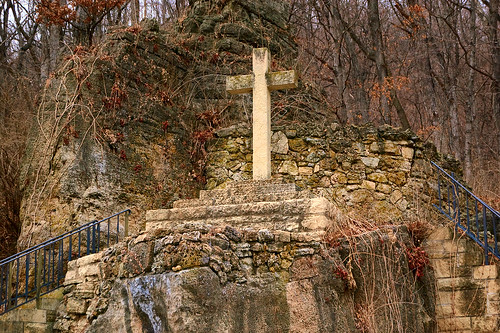
Marquette Monument, in Grafton, Illinois, USA

Near the mouth of the Illinois River is the monument to Father Marquette.