
Thursday, March 02, 2006


Angels and Light - updated
I've been listening to some recorded lectures on philosophy, specifically on Aristotelian physics and angelology. Angels, of course are spiritual creatures, without matter.
Aristotle can help us understand this, and Saint Thomas Aquinas famously used Aristotle to write about everything, including the angels.
A core concept from Aristotle as used and developed by St. Thomas are the "four causes", or reasons for a thing. The Formal Cause is the design of a thing, which may exist in the mind of an artist and also exists in the thing itself. A house is only a house if it is in the Form of a house; the wood or brick that makes it up is not the house, but is the Material Cause of the house; so if a house loses its form, it is just a pile of material.
So according to St. Thomas, angels have a Formal but not a Material cause. They are pure design or Form, without matter. This is a difficult concept for those who think in materialist terms (which includes most of us Moderns).
But then it hit me: I've seen this before.
I studied physics back in college. It was modern physics and not Aristotelian physics, so I was unaware of the Four Causes, and indeed we just studied a subset of them (mainly just Efficient Cause—or how something happens). One very strange concept in modern physics, one which is unexplainable from within that system, is on the nature of light.
Light propogates in the form of a wave. Light is similar to ocean waves, or sound waves, but with a distinct difference: there is NOTHING that 'waves' in light. Sound waves 'wave' air; ocean waves 'wave' water, but there is no 'ether' that 'waves' with light. "How could this be?" I used to wonder. There just has to be an ether that waves: but there is none, it doesn't exist. Waves in matter are similar, but imperfect versions of light waves.
It hit me: light is pure Formal Cause without Material Cause. Had they taught me Classical philosophy back in college I wouldn't have spent decades puzzling over this.
Another concept of Medieval physics is the concept of the hierarchy of Creation: each level in the hierarchy touches those above and below it, with the perfection of one level being reflected in a less perfect way with the level beneath it. So, for example, animals are like quite like humans, but without intellect, and even all the great number of animals are arranged hierarchically, with lesser animals sharing some, but not all characteristics with those above them. Humans are less than angels, but share intellect, although in a lesser manner.
Now, consider the great symbol that is "Light". All throughout Scripture, light is used as a symbol of the Divine: an imperfect symbol, perhaps, but still powerful.
So would it surprise us that the greatest symbol of divinity would share some characteristics (in an imperfect manner) with divinity itself? Light, like the angels, and unlike anything else in the world, is form without matter. That the greatest symbol of divinity should share this characteristic with the Divine is quite fitting.
And according to Scripture, what was the first thing created in the world? "Let there be light."
Light waves, which include all forms of electromagnetic radiation, such as radio, ultraviolet, and so forth, are formed by fluctuations of electric and magnetic fields: but these are not matter. More specifically, these are called 'potential' fields. Gravity also creates a 'potential' field: these are not something that you can directly measure at a point, but it influences motion due to its rate of change over space. We can speak of an object's gravitational or electrical potential, which acts on that object, potentially leading to motion.
The use of this modern term 'potential' ultimately comes from Medieval Aristotelian physics.
And this concept of 'potentialities' in Medieval Aristotelian physics was discovered by Saint Thomas Aquinas.
And he discovered the concept of 'potential' in order to understand angels.
Saint Thomas, pray for our scientists, that they may grow in wisdom and humility, and that they may honor and serve the Lord.
Aristotle can help us understand this, and Saint Thomas Aquinas famously used Aristotle to write about everything, including the angels.
A core concept from Aristotle as used and developed by St. Thomas are the "four causes", or reasons for a thing. The Formal Cause is the design of a thing, which may exist in the mind of an artist and also exists in the thing itself. A house is only a house if it is in the Form of a house; the wood or brick that makes it up is not the house, but is the Material Cause of the house; so if a house loses its form, it is just a pile of material.
So according to St. Thomas, angels have a Formal but not a Material cause. They are pure design or Form, without matter. This is a difficult concept for those who think in materialist terms (which includes most of us Moderns).
But then it hit me: I've seen this before.
I studied physics back in college. It was modern physics and not Aristotelian physics, so I was unaware of the Four Causes, and indeed we just studied a subset of them (mainly just Efficient Cause—or how something happens). One very strange concept in modern physics, one which is unexplainable from within that system, is on the nature of light.
Light propogates in the form of a wave. Light is similar to ocean waves, or sound waves, but with a distinct difference: there is NOTHING that 'waves' in light. Sound waves 'wave' air; ocean waves 'wave' water, but there is no 'ether' that 'waves' with light. "How could this be?" I used to wonder. There just has to be an ether that waves: but there is none, it doesn't exist. Waves in matter are similar, but imperfect versions of light waves.
It hit me: light is pure Formal Cause without Material Cause. Had they taught me Classical philosophy back in college I wouldn't have spent decades puzzling over this.
Another concept of Medieval physics is the concept of the hierarchy of Creation: each level in the hierarchy touches those above and below it, with the perfection of one level being reflected in a less perfect way with the level beneath it. So, for example, animals are like quite like humans, but without intellect, and even all the great number of animals are arranged hierarchically, with lesser animals sharing some, but not all characteristics with those above them. Humans are less than angels, but share intellect, although in a lesser manner.
Now, consider the great symbol that is "Light". All throughout Scripture, light is used as a symbol of the Divine: an imperfect symbol, perhaps, but still powerful.
So would it surprise us that the greatest symbol of divinity would share some characteristics (in an imperfect manner) with divinity itself? Light, like the angels, and unlike anything else in the world, is form without matter. That the greatest symbol of divinity should share this characteristic with the Divine is quite fitting.
And according to Scripture, what was the first thing created in the world? "Let there be light."
Light waves, which include all forms of electromagnetic radiation, such as radio, ultraviolet, and so forth, are formed by fluctuations of electric and magnetic fields: but these are not matter. More specifically, these are called 'potential' fields. Gravity also creates a 'potential' field: these are not something that you can directly measure at a point, but it influences motion due to its rate of change over space. We can speak of an object's gravitational or electrical potential, which acts on that object, potentially leading to motion.
The use of this modern term 'potential' ultimately comes from Medieval Aristotelian physics.
And this concept of 'potentialities' in Medieval Aristotelian physics was discovered by Saint Thomas Aquinas.
And he discovered the concept of 'potential' in order to understand angels.
Saint Thomas, pray for our scientists, that they may grow in wisdom and humility, and that they may honor and serve the Lord.
Wednesday, March 01, 2006
Photos of Saint Roch Church, Saint Louis, Missouri
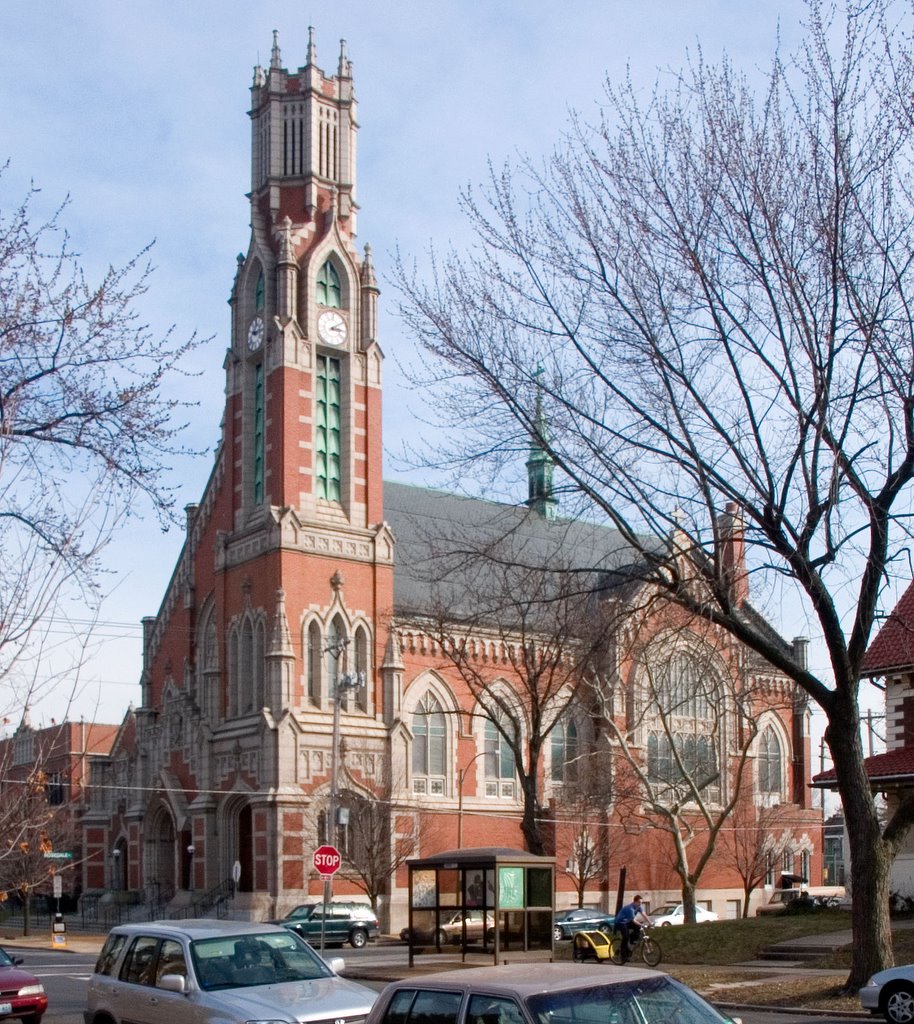
Here is Saint Roch Church, in Saint Louis, Missouri. Click on any photo for a larger version.

Close up of the spires.
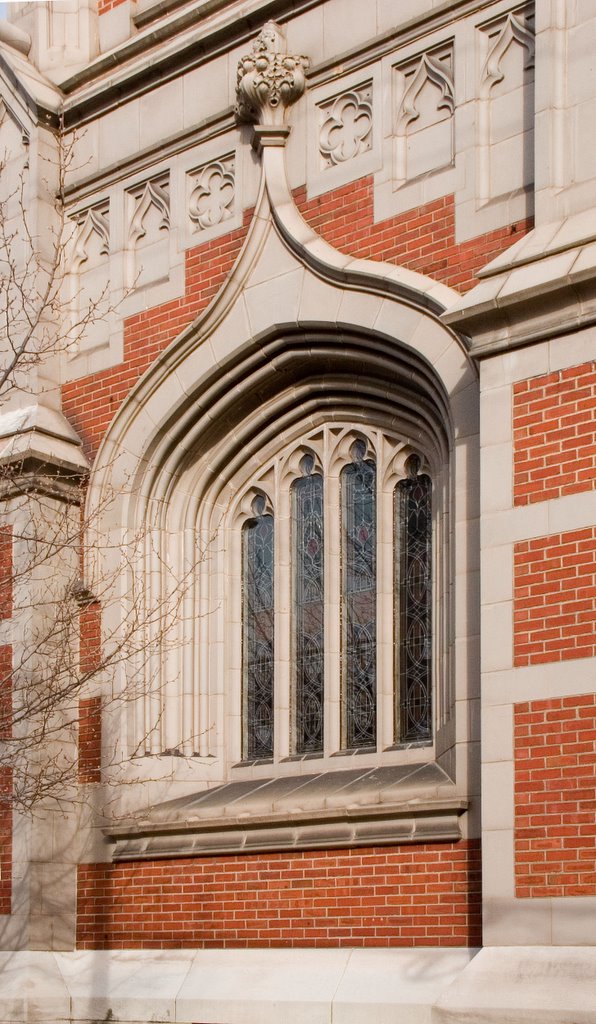
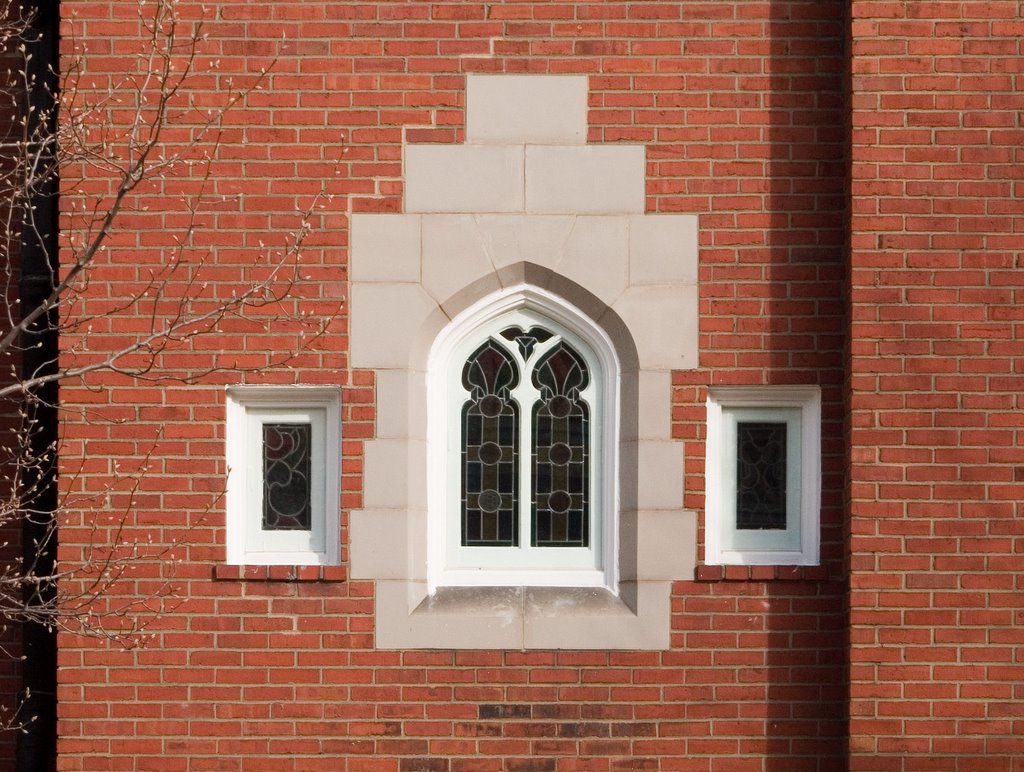
Windows of the church. No interior views today, the church was locked.

Front door.

Rectory.

The old school. To its left is a larger school building of modern design.
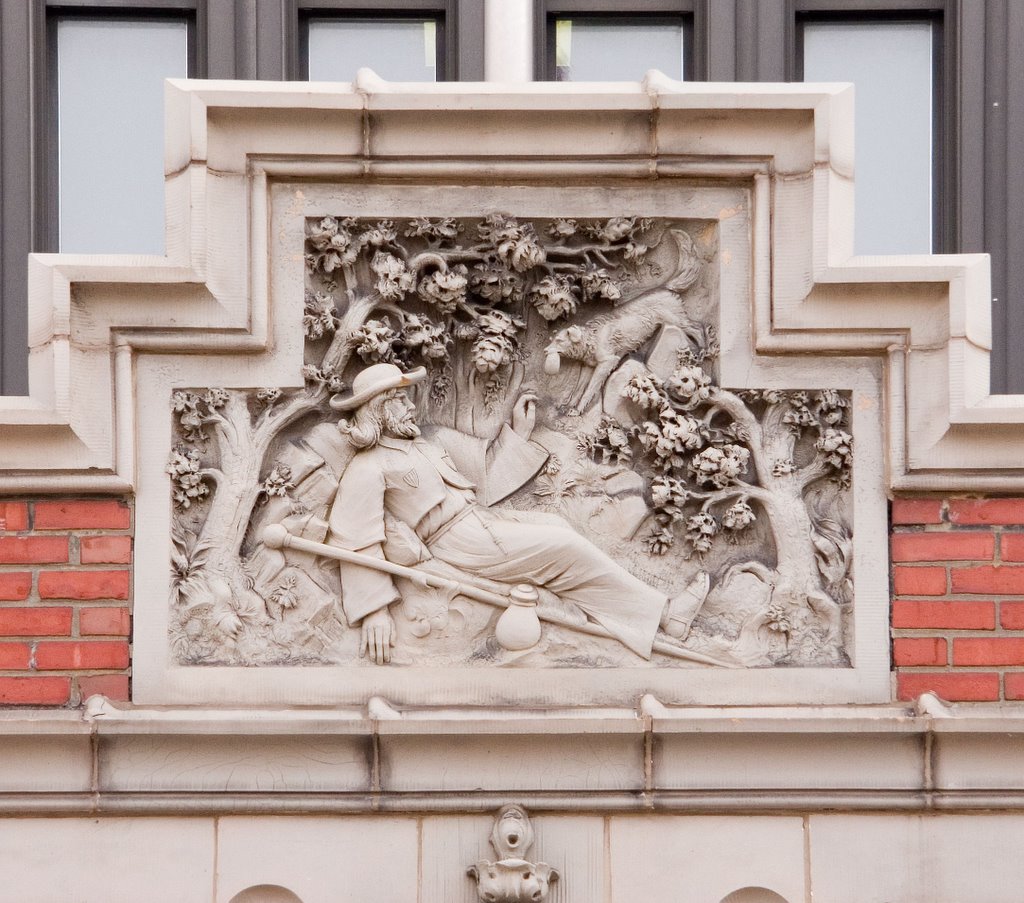
Bas relief of Saint Roch. A dog brought food to the Saint while he was plague-stricken.

AND
+ SAINT ROCH, HIS SERVANT +
PARISH FOUNDED - SEPT. 17th 1911 - CORNERSTONE - SEPT. 17, 1921
Click here for map.
Much thanks to my parents for suggesting this church!
Ash Wednesday
Today's Gospel Reading for Mass, in both the New and Old Latin Rite, includes these verses from the 6th chapter of Matthew:
Since today is Ash Wednesday, a day of fasting, and especially considering the quote above, many question whether or not it is a moral thing to be seen in public with ashes on their head.
Repentance with dust and ashes is a good thing, approved of in Scripture.
Clearly, if it is a matter of pride "See, look at my ashes!" then it might be bad. However, the normative penitential practices of Lent: ashes, fasting, and abstinence, are part of positive Church Law, that is, Church-made regulation and discipline. In this case, then one can publicly practice these, since they uphold the Church. You ought to show to the world that you do what is expected of good Catholics.
Practicing penances otherwise should be done in private, as our Lord commands us.
[16] "And when you fast, do not look dismal, like the hypocrites, for they disfigure their faces that their fasting may be seen by men. Truly, I say to you, they have their reward. [17] But when you fast, anoint your head and wash your face, [18] that your fasting may not be seen by men but by your Father who is in secret; and your Father who sees in secret will reward you."
Since today is Ash Wednesday, a day of fasting, and especially considering the quote above, many question whether or not it is a moral thing to be seen in public with ashes on their head.
Repentance with dust and ashes is a good thing, approved of in Scripture.
Clearly, if it is a matter of pride "See, look at my ashes!" then it might be bad. However, the normative penitential practices of Lent: ashes, fasting, and abstinence, are part of positive Church Law, that is, Church-made regulation and discipline. In this case, then one can publicly practice these, since they uphold the Church. You ought to show to the world that you do what is expected of good Catholics.
Practicing penances otherwise should be done in private, as our Lord commands us.
Guidelines on Lent
Extract from the DIRECTORY ON POPULAR PIETY AND THE LITURGY, PRINCIPLES AND GUIDELINES, from the Congregation for Divine Worship and the Discipline of the Sacraments, promulgated in December 2001:
Lent
124. Lent precedes and prepares for Easter. It is a time to hear the Word of God, to convert, to prepare for and remember Baptism, to be reconciled with God and one's neighbour, and of more frequent recourse to the "arms of Christian penance"(134): prayer, fasting and good works (cf. Mt 6, 1-6. 16-18).
Popular piety does not easily perceive the mystical aspect of Lent and does not emphasize any of its great themes or values, such a relationship between "the sacrament of forty days" and "the sacraments of Christian initiation", nor the mystery of the "exodus" which is always present in the lenten journey. Popular piety concentrates on the mysteries of Christ's humanity, and during Lent the faithful pay close attention to the Passion and Death of Our Lord.
125. In the Roman Rite, the beginning of the forty days of penance is marked with the austere symbol of ashes which are used in the Liturgy of Ash Wednesday. The use of ashes is a survival from an ancient rite according to which converted sinners submitted themselves to canonical penance. The act of putting on ashes symbolizes fragility and mortality, and the need to be redeemed by the mercy of God. Far from being a merely external act, the Church has retained the use of ashes to symbolize that attitude of internal penance to which all the baptized are called during Lent. The faithful who come to receive ashes should be assisted in perceiving the implicit internal significance of this act, which disposes them towards conversion and renewed Easter commitment.
Notwithstanding the secularisation of contemporary society, the Christian faithful, during Lent, are clearly conscious of the need to turn the mind towards those realities which really count, which require Gospel commitment and integrity of life which, through self denial of those things which are superfluous, are translated into good works and solidarity with the poor and needy.
Those of the faithful who infrequently attend the sacraments of Penance and the Holy Eucharist should be aware of the long ecclesial tradition associating the precept of confessing grave sins and receive Holy Communion at least once during the lenten season, or preferably during Eastertide(135).
126. The existing divergence between the liturgical idea of Lent and the outlook of popular piety need not prevent an effective interaction between Liturgy and popular piety during the forty days of Lent.
An example of such interaction is to be seen in fact that popular piety often encourages particular observances on certain days, or special devotional exercises, or apostolic or charitable works which are foreseen and recommended by the lenten Liturgy. The practice of fasting, characteristic of the lenten season since antiquity, is an "exercise" which frees the faithful from earthly concerns so as to discover the life that comes from above: "Man does not live on bread alone, but on every word that comes from the mouth of God" (cf. Dt 8,3; Mt 4, 4; Lk 4,4; antiphon for the first Sunday of Lent).
Veneration of the Crucified Christ
127. The journey of Lent ends with the Easter Triduum, initiated by the celebration of the Coena Domini Mass. During the Triduum, Good Friday which is dedicated to the celebration of the Lord's Passion, is eminently suited for the "Adoration of the Holy Cross".
Popular piety tends to anticipate the cultic veneration of the Cross. Throughout Lent, every Friday is observed, since very ancient times, as a commemoration of the Lord's Passion and the faithful easily direct their devotions towards the mystery of the Cross.
They contemplate the crucified Saviour, they sense more easily the great suffering which Jesus, the Holy and Innocent One, suffered for the salvation of mankind. They understand his love and the effectiveness of his redemptive sacrifice.
128. The various and numerous devotions to the crucified Christ acquire a special significance in those churches dedicated to the mystery of the Cross or where authentic relics of the true cross are venerated. The "invention of the Cross" in the early fourth century, and the subsequent diffusion throughout the Church of particles of the true Cross, gave notable impulse to devotion to the Cross.
Devotions to the crucified Crist contain many elements usually found in popular piety: hymns and prayers, acts such as the unveiling and kissing of the Cross, processions and blessing with the Cross. These can lead to the development of pious exercises often containing many valuable formal and material elements.
Devotion to the Cross, however, sometimes requires a certain enlightenment. The faithful should be taught to place the Cross in its essential reference to the Resurrection of Christ: the Cross, the empty tomb, the Death and Resurrection of Crist are indispensable in the Gospel narrative of God's salvific plan. In the Christian faith, the Cross is an expression of the triumph of Christ over the powers of darkness. Hence, it is adorned with precious stones and is a sign of blessing when made upon one's self, or on others or on objects.
129. The Gospel texts of the Passion are especially detailed. Coupled with a tendency in popular piety to isolate specific moments of the narrative, this has induced the faithful to turn their attention to specific aspects of the Passion of Christ, making of them specific devotions: devotion to the "Ecce Homo", Christ despised, "crowned with thorns and clothed in a purple cloak" (John 19, 5), and shown to the multitude by Pilate; devotion to the five sacred wounds of Christ, especially to the side of Christ from which flowed blood and water for the salvation of mankind (John 19, 34); devotion to the instruments of the Passion, the pillar at which Christ was scourged, the steps of the Praetorium, the crown of thorns, the nails, the lance that pierced Him; devotion to the Holy Shroud.
Such expressions of piety, often promoted by persons of great sanctity, are legitimate. However, in order to avoid excessive fragmentation in contemplation of the mystery of the Cross, it is always useful to emphasise the whole event of the Passion, as is the case in biblical and patristic tradition.
Reading of the Lord's Passion
130. The Church exhorts the faithful to frequent personal and community reading of the Word of God. Undoubtedly, the account of the Lord's Passion is among the most important pastoral passages in the New Testament. Hence, for the Christian in his last agony, the Ordo untionis informorum eorumque pastoralis curae suggests the reading of the Lord's Passion either in its entirety, or at least some pericopes from it(136).
During Lent, especially on Wednesdays and Fridays, love for our Crucified Saviour should move the Christian community to read the account of the Lord's Passion. Such reading, which is doctrinally significant, attracts the attention of the faithful because of its content and because of its narrative form, and inspires true devotion: repentance for sins, since the faithful see that Christ died for the sins of the entire human race, including their own; compassion and solidarity for the Innocent who was unjustly condemned; gratitude for the infinite love of Jesus for all the brethren, which was shown by Jesus, the first born Son, in his Passion; commitment to imitating his example of meekness, patience, mercy, forgiveness of offenses, abandonment to the Father, which Jesus did willingly and efficaciously in his Passion.
Outside of the liturgical celebration of the Passion, the Gospel narrative can be "dramatized", giving the various parts of the narrative to different persons; or by interspersing it with hymns or moments of silent reflection.
Via Crucis
131. Of all the pious exercises connected with the veneration of the Cross, none is more popular among the faithful than the Via Crucis. Through this pious exercise, the faithful movingly follow the final earthly journey of Christ: from the Mount of Olives, where the Lord, "in a small estate called Gethsemane" (Mk 14, 32), was taken by anguish (cf. Lk 22, 44), to Calvary where he was crucified between two thieves (cf. Lk 23, 33), to the garden where he was placed in freshly hewn tomb (John 19, 40-42).
The love of the Christian faithful for this devotion is amply attested by the numerous Via Crucis erected in so many churches, shrines, cloisters, in the countryside, and on mountain pathways where the various stations are very evocative.
132. The Via Crucis is a synthesis of various devotions that have arisen since the high middle ages: the pilgrimage to the Holy Land during which the faithful devoutly visit the places associated with the Lord's Passion; devotion to the three falls of Christ under the weight of the Cross; devotion to "the dolorous journey of Christ" which consisted in processing from one church to another in memory of Christ's Passion; devotion to the stations of Christ, those places where Christ stopped on his journey to Calvary because obliged to do so by his executioners or exhausted by fatigue, or because moved by compassion to dialogue with those who were present at his Passion.
In its present form, the Via Crucis, widely promoted by St. Leonardo da Porto Maurizio (+1751), was approved by the Apostolic See and indulgenced(137), consists of fourteen stations since the middle of seventeenth century.
133. The Via Crucis is a journey made in the Holy Spirit, that divine fire which burned in the heart of Jesus (cf. Lk 12, 49-50) and brought him to Calvary. This is a journey well esteemed by the Church since it has retained a living memory of the words and gestures of the final earthly days of her Spouse and Lord.
In the Via Crucis, various strands of Christian piety coalesce: the idea of life being a journey or pilgrimage; as a passage from earthly exile to our true home in Heaven; the deep desire to be conformed to the Passion of Christ; the demands of following Christ, which imply that his disciples must follow behind the Master, daily carrying their own crosses (cf Lk 9, 23).
The Via Crucis is a particularly apt pious exercise for Lent.
134. The following may prove useful suggestions for a fruitful celebration of the Via Crucis:
135. Innumerable texts exist for the celebration of the Via Crucis. Many of them were compiled by pastors who were sincerely interested in this pious exercise and convinced of its spiritual effectiveness. Texts have also been provided by lay authors who were known for their exemplary piety, holiness of life, doctrine and literary qualities.
Bearing in mind whatever instructions might have been established by the bishops in the matter, the choice of texts for the Via Crucis should take a count of the condition of those participating in its celebration and the wise pastoral principle of integrating renewal and continuity. It is always preferable to choose texts resonant with the biblical narrative and written in a clear simple style.
The Via Crucis in which hymns, silence, procession and reflective pauses are wisely integrated in a balanced manner, contribute significantly to obtaining the spiritual fruits of the pious exercise.
The Via Matris
136. As Christ and Our Lady of Dolours were associated in God's saving plan (Lk 2, 34-35), so too they are associated in the Liturgy and popular piety.
As Christ was the "man of sorrows" (Is 53, 3) through whom it pleased God to have "reconciled all things through him and for him, everything in heaven and everything on earth, when he made peace by his death on the cross" (Col 1, 20), so too, Mary is "the woman of sorrows" whom God associated with his Son as mother and participant in his Passion (socia passionis).
Since the childhood of Christ, the Blessed Virgin Mary's life was entirely lived out under the sign of the sword (cf, Lk 2, 35). Christian piety has signalled out seven particular incidents of sorrow in her life, known as the "seven sorrows" of the Blessed Virgin Mary.
Modelled on the Via Crucis, the pious exercise of the Via Matris dolorosae, or simply the Via Matris, developed and was subsequently approved by the Apostolic See(140). This pious exercise already existed in embryonic form since the sixteenth century, while its present form dates from the nineteenth century. Its fundamental intuition is a reflection on the life of Our Lady from the prophecy of Simeon (cf. Lk 2, 34-35), to the death and burial of her Son, in terms of a journey in faith and sorrow: this journey is articulated in seven "stations" corresponding to the "seven dolours" of the Mother of Our Saviour.
137. This pious exercise harmonises well with certain themes that are proper to the lenten season. Since the sorrows of Our Lady are caused by the rejection of her Son (cf. John 1,11; Lk 2, 1-7; 2, 34-35; 4, 28-29; Mt 26, 47-56; Acts 12, 1-5), the Via Matris constantly and necessarily refers to the mystery of Christ as the suffering servant (cf. Is 52, 13-53, 12). It also refers to the mystery of the Church: the stations of the Via Matris are stages on the journey of faith and sorrow on which the Virgin Mary has preceded the Church, and in which the Church journeys until the end of time.
The highest expression of the Via Matris is the Pietà which has been an inexhaustible source of inspiration for Christian art since the middles ages.
(134) MISSALE ROMANUM, Feria IV Cinerum, Collecta.
(135) Cf. CIC, canons 989 and 920.
(136) Cf. RITUALE ROMANUM, Ordo unctionis infirmorum eorumque pastoralis curae, Editio Typica, Typis Polyglotis Vaticanis 1972, nn. 224-229.
(137) Cf. EI, Aliae concessiones, 13, pp. 59-60.
(138) Such is true of the "Via Crucis" in the Libro del Pellegrino prepared by the Central Committee for the celebration of the Holy Year of 1975.
(139) Such as the texts used by Pope John Paul II for the "Via Crucis" at the Colosseum in 1991, 1992, and 1994.
(140) Cf. LEO XIII, Apostolic Letter Deipare Perdolentis, in Leonis XIII Pontificis Maximi Acta, III, Typographia Vaticana 1884, pp. 220-222.
Lent
124. Lent precedes and prepares for Easter. It is a time to hear the Word of God, to convert, to prepare for and remember Baptism, to be reconciled with God and one's neighbour, and of more frequent recourse to the "arms of Christian penance"(134): prayer, fasting and good works (cf. Mt 6, 1-6. 16-18).
Popular piety does not easily perceive the mystical aspect of Lent and does not emphasize any of its great themes or values, such a relationship between "the sacrament of forty days" and "the sacraments of Christian initiation", nor the mystery of the "exodus" which is always present in the lenten journey. Popular piety concentrates on the mysteries of Christ's humanity, and during Lent the faithful pay close attention to the Passion and Death of Our Lord.
125. In the Roman Rite, the beginning of the forty days of penance is marked with the austere symbol of ashes which are used in the Liturgy of Ash Wednesday. The use of ashes is a survival from an ancient rite according to which converted sinners submitted themselves to canonical penance. The act of putting on ashes symbolizes fragility and mortality, and the need to be redeemed by the mercy of God. Far from being a merely external act, the Church has retained the use of ashes to symbolize that attitude of internal penance to which all the baptized are called during Lent. The faithful who come to receive ashes should be assisted in perceiving the implicit internal significance of this act, which disposes them towards conversion and renewed Easter commitment.
Notwithstanding the secularisation of contemporary society, the Christian faithful, during Lent, are clearly conscious of the need to turn the mind towards those realities which really count, which require Gospel commitment and integrity of life which, through self denial of those things which are superfluous, are translated into good works and solidarity with the poor and needy.
Those of the faithful who infrequently attend the sacraments of Penance and the Holy Eucharist should be aware of the long ecclesial tradition associating the precept of confessing grave sins and receive Holy Communion at least once during the lenten season, or preferably during Eastertide(135).
126. The existing divergence between the liturgical idea of Lent and the outlook of popular piety need not prevent an effective interaction between Liturgy and popular piety during the forty days of Lent.
An example of such interaction is to be seen in fact that popular piety often encourages particular observances on certain days, or special devotional exercises, or apostolic or charitable works which are foreseen and recommended by the lenten Liturgy. The practice of fasting, characteristic of the lenten season since antiquity, is an "exercise" which frees the faithful from earthly concerns so as to discover the life that comes from above: "Man does not live on bread alone, but on every word that comes from the mouth of God" (cf. Dt 8,3; Mt 4, 4; Lk 4,4; antiphon for the first Sunday of Lent).
Veneration of the Crucified Christ
127. The journey of Lent ends with the Easter Triduum, initiated by the celebration of the Coena Domini Mass. During the Triduum, Good Friday which is dedicated to the celebration of the Lord's Passion, is eminently suited for the "Adoration of the Holy Cross".
Popular piety tends to anticipate the cultic veneration of the Cross. Throughout Lent, every Friday is observed, since very ancient times, as a commemoration of the Lord's Passion and the faithful easily direct their devotions towards the mystery of the Cross.
They contemplate the crucified Saviour, they sense more easily the great suffering which Jesus, the Holy and Innocent One, suffered for the salvation of mankind. They understand his love and the effectiveness of his redemptive sacrifice.
128. The various and numerous devotions to the crucified Christ acquire a special significance in those churches dedicated to the mystery of the Cross or where authentic relics of the true cross are venerated. The "invention of the Cross" in the early fourth century, and the subsequent diffusion throughout the Church of particles of the true Cross, gave notable impulse to devotion to the Cross.
Devotions to the crucified Crist contain many elements usually found in popular piety: hymns and prayers, acts such as the unveiling and kissing of the Cross, processions and blessing with the Cross. These can lead to the development of pious exercises often containing many valuable formal and material elements.
Devotion to the Cross, however, sometimes requires a certain enlightenment. The faithful should be taught to place the Cross in its essential reference to the Resurrection of Christ: the Cross, the empty tomb, the Death and Resurrection of Crist are indispensable in the Gospel narrative of God's salvific plan. In the Christian faith, the Cross is an expression of the triumph of Christ over the powers of darkness. Hence, it is adorned with precious stones and is a sign of blessing when made upon one's self, or on others or on objects.
129. The Gospel texts of the Passion are especially detailed. Coupled with a tendency in popular piety to isolate specific moments of the narrative, this has induced the faithful to turn their attention to specific aspects of the Passion of Christ, making of them specific devotions: devotion to the "Ecce Homo", Christ despised, "crowned with thorns and clothed in a purple cloak" (John 19, 5), and shown to the multitude by Pilate; devotion to the five sacred wounds of Christ, especially to the side of Christ from which flowed blood and water for the salvation of mankind (John 19, 34); devotion to the instruments of the Passion, the pillar at which Christ was scourged, the steps of the Praetorium, the crown of thorns, the nails, the lance that pierced Him; devotion to the Holy Shroud.
Such expressions of piety, often promoted by persons of great sanctity, are legitimate. However, in order to avoid excessive fragmentation in contemplation of the mystery of the Cross, it is always useful to emphasise the whole event of the Passion, as is the case in biblical and patristic tradition.
Reading of the Lord's Passion
130. The Church exhorts the faithful to frequent personal and community reading of the Word of God. Undoubtedly, the account of the Lord's Passion is among the most important pastoral passages in the New Testament. Hence, for the Christian in his last agony, the Ordo untionis informorum eorumque pastoralis curae suggests the reading of the Lord's Passion either in its entirety, or at least some pericopes from it(136).
During Lent, especially on Wednesdays and Fridays, love for our Crucified Saviour should move the Christian community to read the account of the Lord's Passion. Such reading, which is doctrinally significant, attracts the attention of the faithful because of its content and because of its narrative form, and inspires true devotion: repentance for sins, since the faithful see that Christ died for the sins of the entire human race, including their own; compassion and solidarity for the Innocent who was unjustly condemned; gratitude for the infinite love of Jesus for all the brethren, which was shown by Jesus, the first born Son, in his Passion; commitment to imitating his example of meekness, patience, mercy, forgiveness of offenses, abandonment to the Father, which Jesus did willingly and efficaciously in his Passion.
Outside of the liturgical celebration of the Passion, the Gospel narrative can be "dramatized", giving the various parts of the narrative to different persons; or by interspersing it with hymns or moments of silent reflection.
Via Crucis
131. Of all the pious exercises connected with the veneration of the Cross, none is more popular among the faithful than the Via Crucis. Through this pious exercise, the faithful movingly follow the final earthly journey of Christ: from the Mount of Olives, where the Lord, "in a small estate called Gethsemane" (Mk 14, 32), was taken by anguish (cf. Lk 22, 44), to Calvary where he was crucified between two thieves (cf. Lk 23, 33), to the garden where he was placed in freshly hewn tomb (John 19, 40-42).
The love of the Christian faithful for this devotion is amply attested by the numerous Via Crucis erected in so many churches, shrines, cloisters, in the countryside, and on mountain pathways where the various stations are very evocative.
132. The Via Crucis is a synthesis of various devotions that have arisen since the high middle ages: the pilgrimage to the Holy Land during which the faithful devoutly visit the places associated with the Lord's Passion; devotion to the three falls of Christ under the weight of the Cross; devotion to "the dolorous journey of Christ" which consisted in processing from one church to another in memory of Christ's Passion; devotion to the stations of Christ, those places where Christ stopped on his journey to Calvary because obliged to do so by his executioners or exhausted by fatigue, or because moved by compassion to dialogue with those who were present at his Passion.
In its present form, the Via Crucis, widely promoted by St. Leonardo da Porto Maurizio (+1751), was approved by the Apostolic See and indulgenced(137), consists of fourteen stations since the middle of seventeenth century.
133. The Via Crucis is a journey made in the Holy Spirit, that divine fire which burned in the heart of Jesus (cf. Lk 12, 49-50) and brought him to Calvary. This is a journey well esteemed by the Church since it has retained a living memory of the words and gestures of the final earthly days of her Spouse and Lord.
In the Via Crucis, various strands of Christian piety coalesce: the idea of life being a journey or pilgrimage; as a passage from earthly exile to our true home in Heaven; the deep desire to be conformed to the Passion of Christ; the demands of following Christ, which imply that his disciples must follow behind the Master, daily carrying their own crosses (cf Lk 9, 23).
The Via Crucis is a particularly apt pious exercise for Lent.
134. The following may prove useful suggestions for a fruitful celebration of the Via Crucis:
- the traditional form of the Via Crucis, with its fourteen stations, is to be retained as the typical form of this pious exercise; from time to time, however, as the occasion warrants, one or other of the traditional stations might possibly be substituted with a reflection on some other aspects of the Gospel account of the journey to Calvary which are traditionally included in the Stations of the Cross;
- alternative forms of the Via Crucis have been approved by Apostolic See(138) or publicly used by the Roman Pontiff(139): these can be regarded as genuine forms of the devotion and may be used as occasion might warrant;
- the Via Crucis is a pious devotion connected with the Passion of Christ; it should conclude, however, in such fashion as to leave the faithful with a sense of expectation of the resurrection in faith and hope; following the example of the Via Crucis in Jerusalem which ends with a station at the Anastasis, the celebration could end with a commemoration of the Lord's resurrection.
135. Innumerable texts exist for the celebration of the Via Crucis. Many of them were compiled by pastors who were sincerely interested in this pious exercise and convinced of its spiritual effectiveness. Texts have also been provided by lay authors who were known for their exemplary piety, holiness of life, doctrine and literary qualities.
Bearing in mind whatever instructions might have been established by the bishops in the matter, the choice of texts for the Via Crucis should take a count of the condition of those participating in its celebration and the wise pastoral principle of integrating renewal and continuity. It is always preferable to choose texts resonant with the biblical narrative and written in a clear simple style.
The Via Crucis in which hymns, silence, procession and reflective pauses are wisely integrated in a balanced manner, contribute significantly to obtaining the spiritual fruits of the pious exercise.
The Via Matris
136. As Christ and Our Lady of Dolours were associated in God's saving plan (Lk 2, 34-35), so too they are associated in the Liturgy and popular piety.
As Christ was the "man of sorrows" (Is 53, 3) through whom it pleased God to have "reconciled all things through him and for him, everything in heaven and everything on earth, when he made peace by his death on the cross" (Col 1, 20), so too, Mary is "the woman of sorrows" whom God associated with his Son as mother and participant in his Passion (socia passionis).
Since the childhood of Christ, the Blessed Virgin Mary's life was entirely lived out under the sign of the sword (cf, Lk 2, 35). Christian piety has signalled out seven particular incidents of sorrow in her life, known as the "seven sorrows" of the Blessed Virgin Mary.
Modelled on the Via Crucis, the pious exercise of the Via Matris dolorosae, or simply the Via Matris, developed and was subsequently approved by the Apostolic See(140). This pious exercise already existed in embryonic form since the sixteenth century, while its present form dates from the nineteenth century. Its fundamental intuition is a reflection on the life of Our Lady from the prophecy of Simeon (cf. Lk 2, 34-35), to the death and burial of her Son, in terms of a journey in faith and sorrow: this journey is articulated in seven "stations" corresponding to the "seven dolours" of the Mother of Our Saviour.
137. This pious exercise harmonises well with certain themes that are proper to the lenten season. Since the sorrows of Our Lady are caused by the rejection of her Son (cf. John 1,11; Lk 2, 1-7; 2, 34-35; 4, 28-29; Mt 26, 47-56; Acts 12, 1-5), the Via Matris constantly and necessarily refers to the mystery of Christ as the suffering servant (cf. Is 52, 13-53, 12). It also refers to the mystery of the Church: the stations of the Via Matris are stages on the journey of faith and sorrow on which the Virgin Mary has preceded the Church, and in which the Church journeys until the end of time.
The highest expression of the Via Matris is the Pietà which has been an inexhaustible source of inspiration for Christian art since the middles ages.
(134) MISSALE ROMANUM, Feria IV Cinerum, Collecta.
(135) Cf. CIC, canons 989 and 920.
(136) Cf. RITUALE ROMANUM, Ordo unctionis infirmorum eorumque pastoralis curae, Editio Typica, Typis Polyglotis Vaticanis 1972, nn. 224-229.
(137) Cf. EI, Aliae concessiones, 13, pp. 59-60.
(138) Such is true of the "Via Crucis" in the Libro del Pellegrino prepared by the Central Committee for the celebration of the Holy Year of 1975.
(139) Such as the texts used by Pope John Paul II for the "Via Crucis" at the Colosseum in 1991, 1992, and 1994.
(140) Cf. LEO XIII, Apostolic Letter Deipare Perdolentis, in Leonis XIII Pontificis Maximi Acta, III, Typographia Vaticana 1884, pp. 220-222.
Subscribe to:
Posts (Atom)
