Please let me know if you have any questions about these items.

Friday, May 09, 2008


Upcoming Events at the Oratory
Saint Francis de Sales Oratory
2653 Ohio Avenue
Saint Louis, Missouri 63118
314-771-3100
7 May 2008
Email newsletter contains information about:
Pentecost Sunday-Whitsunday
K of C Council # 14067-Mothers Day Brunch
Visit of the Very Rev. Msgr. Gilles Wach-Founder and Prior General
Institute of Christ the King Sovereign Priest
Sunday May 11, 2007: Pentecost Sunday
10 am First Holy Communion
After 8 am and 10 am Masses: 2nd Annual Mother’s Day Breakfast by the Knights of Columbus in the church hall: Please Contact Mr. Tom Leith at 314. 481. 2512 to make your reservation. Reservations end on Friday May 9th. The price is $15.00 for adults, $10.00 for children 12 and under, and FREE for children 3 and under.
Recital of the Oratory Choirs at the Breakfast
Sunday May 25, 2007: Corpus Christi
10 am Solemn High Mass with Procession.
The Choir will sing Mozart’s “Spatzen-Messe”
Tuesday, June 3, 2007: Visit of the Very Rev. Msgr. Gilles Wach, Founder and Prior General of the Institute of Christ the King Sovereign Priest
6:30 pm Votive Mass of Our Mother of Perpetual Help, Perpetual Help Devotions
Mass will be followed by a reception in the church hall.
Dear Faithful and Friends of St. Francis de Sales Oratory,
For several of our smallest Oratory members, this Pentecost Sunday is a most significant day—the day of their First Holy Communion, the day they receive our blessed Lord in the Most Blessed Sacrament of the Altar. Now they receive for the first time the food which will strengthen them spiritually and grow them into strong members of Christ’s Mystical Body. Let us all pray for them that they will receive Our Lord frequently and grow closer to Him each day. It is very fitting that we celebrate the First Communion on this feast of Pentecost because it is the Holy Ghost who unites us in the sacramental life of the Church with Christ, the head of His Mystical Body and through Him with the Heavenly Father.
It is also very fitting that this year on the same day we honor all our mothers here at the Oratory. The Blessed Virgin Mary, the new Eve and prototype of all mothers is the Bride of the Holy Ghost. Mothers’ Day is a good opportunity to remember all of our mothers and pray for them. This is the second year the Knights of Columbus are hosting a breakfast buffet for Mothers in our Oratory hall. I wish them all well and a happy, gracious day of relaxation with their families.
I am also most grateful to the Music Department at the Oratory and to Our Music Director, Mr. Nick Botkins, for the recital they will give on the occasion of the breakfast in the church hall. This should be a great encouragement to join and to support our choirs in their hard work for the dignity and beauty of the liturgy. It is with great joy that we can announce today that on the external solemnity of Corpus Christi, on Sunday May 25 during the Solemn High Mass (10am) that precedes the Solemn Procession with the Blessed Sacrament, the choir will sing the “Spatzenmesse” by Wolfgang Amadeus Mozart. This will contribute a lot to the solemnity of this celebration and we are most grateful for this expression of love and veneration of our Lord, present in the Holy Eucharist.
On Tuesday, June 3, we will have the occasion to welcome the beloved founder and Prior General of our Institute, the Very Rev. Msgr. Gilles Wach. At 6:30 pm he will celebrate the Votive Mass of Our Mother of Perpetual Help, followed by the traditional Perpetual Help Devotions. It would be a wonderful expression of gratitude for the work and the presence of the Institute of Christ the King Sovereign Priest if many of you could attend this Mass. It will be followed by a reception in the Church hall where everyone will be able to meet and greet with Msgr.Wach.
Finally, there is wonderful news about our highly venerated Archbishop, His Grace, The Most Rev. Raymond L. Burke. Our Holy Father, Pope Benedict XVI, has honored him by appointing him to two Vatican offices. He has been named to the Pontifical Commission for Legislative Texts, which interprets canon law, and to the Congregation for the Clergy, which regulates questions of the life of the clergy. These appointments confirm the great pastoral wisdom and strength of our beloved shepherd and our Institute as the clergy and the faithful of St. Francis de Sales Oratory congratulate His Grace wholeheartedly on this expression of confidence and esteem by the Holy Father. We gratefully renew the assurance of our faithful prayers for the intentions of our Archbishop: May he stand and shepherd in Thy strength, O Lord, in the sublimity of Thy name - Stet et pascat, in fortitudine tua, Domine, in sublimitate nominis tui.
Yours devotedly in Christ the King,
Fr. Karl W. Lenhardt
Episcopal Delegate/Rector/Vice Provincial
Ordinary schedule of Masses at the Oratory:
Daily: 8:00am Low Mass
Sunday: 8:00am Low Mass, 10:00 Solemn High Mass
Tuesday: 6:30pm Low Mass, followed by Perpetual Help devotions
Wednesday: 8am; 12:00 NOON, Low Mass
Thursday: 7:00pm Adoration of the Most Blessed Sacrament with Benediction
First Friday: 7:00pm Solemn High Mass
Holy Days: 8:00am, and 12:10pm, 7:00pm Solemn High Mass
Confessions/ Holy Rosary 30mins before all Masses
Thursday, May 08, 2008
Photos of the Anheuser-Busch Brewery
THE SOUTHERNMOST quarter of Saint Louis' Soulard neighborhood is covered by the massive and venerable Anheuser-Busch Brewery. This, the largest brewery of the largest brewer, holds pride of place among the businesses in the city's south side.

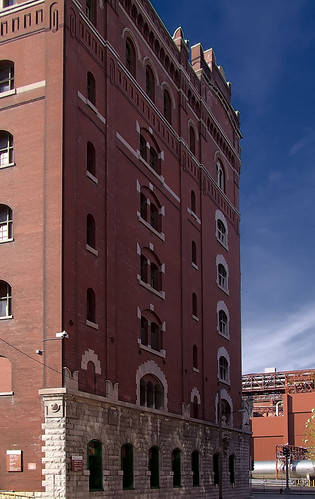

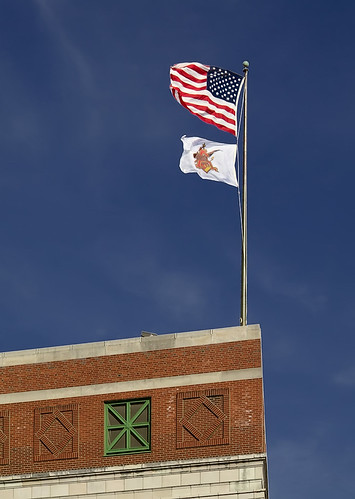

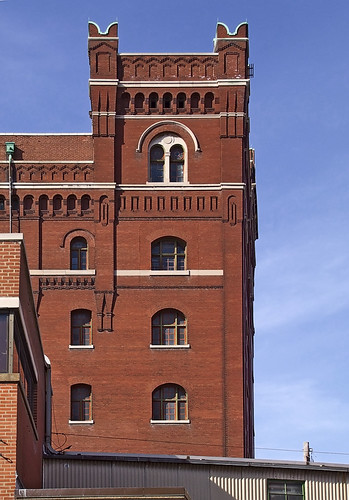
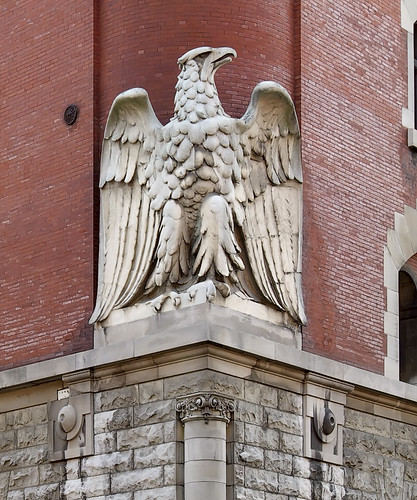



A commercial brewery has existed on this site since the 1830s, founded by German immigrants. Beneath this land are numerous caves, where the beer was kept naturally cool. It is also close to the river, a convenient source of plenty of water.
In 1857, soap-maker Eberhard Anheuser purchased the bankrupt Bavarian Brewery here, and in 1865, brought his son-in-law Adolphus Busch into the business, who quickly took over management, leading to enormous growth.
Following the devastation of the War Between the States, people started moving West again, and Saint Louis remained a hub of trade and transportation to places beyond. The Anheuser-Busch Brewery, taking advantage of the new technologies of Pasteurization, artificial refrigeration, and rail transport, was able to economically ship large amounts of cold beer to the western United States. Perhaps the increasing availability of beer, a mild beverage, helped tame the Wild West, which until that time slated its thirst on hard liquor.
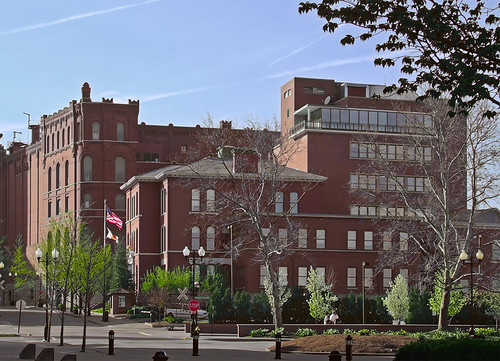
About 137 buildings on 142 acres comprise the brewery. Many of the buildings date from the late 19th century, and are made of brick in the "Brewery Romanesque" style.
A-B was a company founded by immigrants; it hired immigrants, and sold its products to immigrants. When these Europeans brought their love of beauty and their artistic ability to our shores, they built a brewery that has great charm and a delight to the senses. Even the fragrance of the brewing beer is wonderful.
A hard-nosed businessman would have no use for this nonsense. What is beauty and delight, he thinks, over utility, efficiency, and profitability? But one needs only to travel a few miles to the other side of the river, to see vast blasted landscapes of utilitarian industry, now long bankrupt, and sitting empty and rotting. Anheuser-Busch still stands, though weakened. Beauty, though not the greatest good, is still transcendent, and exceeds in value the merely worldly prudence of efficiency.
Eventually, the strictly utilitarian style of American industrial architecture inspired the Europeans, who thought that American grain elevators had an ideal aesthetic for the Machine Age. Transported back to the United States, this new kind of iconoclastic architecture overwhelmed all local and traditional styles, even at this brewery. Ironically, some structures here built in the Modern style were the first to be demolished, since they were embarrassments, fashionable for only a day.
Prior to the implementation of the Civil Rights Act of 1964, Anheuser-Busch was one of the few major local employers that would hire Catholics, and consequently it still had a Catholic culture (although sharply declining) when I worked there. Black smudges on foreheads were seen everywhere here on Ash Wednesday, and Good Friday was a corporate holiday. Ah, the false promises of the 1960s; Catholics were to leave their Ghettos and become lights to the world; rather, the world crushed and subverted the Faith, to the world's detriment.
At one time, just about the only way to get a job at A-B was if your father worked there. Since that time, the company has become more similar to other American businesses, first in becoming more utilitarian with money becoming the summum bonum, or Greatest Good; and second in accepting the culture of marxist class conflict: women vs. men, labor vs. management, young vs. old, minorities vs. whites, and so forth. Employees, at one time, were fiercely loyal to the company and to each other, but this was snuffed out by the modern business environment. My friends who still work for the company find the current environment there rather unpleasant. The loss of a good corporate culture has its consequences: why should anyone remain loyal to buying the company's products? Beer becomes just one more anonymous commodity.
Even the smokestacks are decorative.
The City of Saint Louis sees this brewery as a cash cow, and milks it for tax dollars at every opportunity. Quietly, the company has been moving its office staff to anonymous office buildings in the suburbs, thereby avoiding the city income tax. This harms the city, and it also harms the company, for its employees lose their direct, daily connection with the product made. How much better would the city be, economically and culturally, if many more employees called the City their home? But as voters, they would place the current government in peril of losing their elected offices.
Good art and good architecture are not hard to come by, they simply require an act of the will, and a denial of what the world wants. Modernism was long felt to be inevitable, and even if we didn't like it, many thought that there was no choice in the matter. Most of A-B's newer breweries are of utilitarian design, and so largely lack charm. Cost was often cited as a reason for accepting utilitarianism in industrial design, but this is a bogus argument; for art was never considered in the first place — even though making new company buildings decorative was actually a corporate mandate.
A major problem, I think, is that contemporary technologists tend to have only a vocational and not a liberal education, and therefore never get a chance to develop a high sense of beauty, family, community, and harmony, which are greater things in life. Nowadays, if a technologist gets any college humanities at all, it will be thoroughly politicized and Marxist, having hatred for our traditional artistic and moral patrimony.
A former hotel, now an office building.


Reynard the Fox, a character from French folklore dating from the 12th century, who loved good food and drink, was the mascot of A-B's near-beer product Bevo.
The company promoted its beer as a healthy beverage to drink while having a meal, being a moderate alternative to both hard liquor and Puritanical prohibition. These lessons are being forgotten, especially as vodka and martinis have come back into fashion. On the one hand, we have a trendy resurgence in the booze culture, and on the other, we have extreme governmental intolerance of intoxication; so moderation is lost.
Precisely as I was taking this photo, a security guard stopped me for questioning, even though I was standing on the sidewalk of a public street. Of course, he was just doing his job, but for the sake of security the perimeter of the brewery is now surrounded by high fencing. Something is lost; when wealth and power cuts itself off from the people, it alienates itself from society.
The former Lyon public school (to the right of the flagpole) is now an office building. Unseen behind the camera is the ten acre Lyon Park.
These were named after the controversial Union general Nathaniel Lyon. Missouri was sharply divided during the Civil War, with Progressive, secularist German immigrants radically supporting the Union cause against the pro-Southern older population. Adjacent to the brewery on the east is the former U.S. Arsenal (at the foot of Arsenal Street, now the National Geospatial-Intelligence Agency). In 1861, Missouri Governor Claiborne Fox Jackson secretly ordered the State Militia to capture the weapons at the Arsenal; instead, Lyon distributed arms from the Arsenal to his own partisans, the Wide Awakes, and attacked the militia on what is now the Saint Louis University campus, leading to the Saint Louis Massacre. The captured militiamen were marched to the Arsenal for imprisonment, being guarded by heavily armed civilian foreigners; this disgrace caused further conflict.
Lyon threatened genocide against the population of Missouri at the outbreak of the conflict, and was the first general killed during the war, at the Battle of Wilson's Creek near Springfield.
Catholics were mainly caught in the middle during the War. The Bishops in the United States were instructed by the Apostolic Nuncio to remain neutral. This was a dangerous position to take, especially in this war where brother was often set against brother. Archbishop Kenrick strictly maintained this neutrality, despite attacks from both sides: outstate Catholic settlements were annihilated during the conflict by Southern forces, while Catholic institutions in the City were subjected to riots and arson by Northern sympathizers.
A brew house, dating from 1992, resembles the style of the older buildings.
A few buildings here are empty. Largely due to asbestos abatement regulations, upgrading these buildings for contemporary use is prohibitively expensive, as would be their demolition. Asbestos, while being a health hazard, is excellent for resisting fire, which is an even greater health hazard.
Plenty of hay is for Clydesdale horses.
Just south of the brewery is Saint Agatha's church. Once the location of the Latin Mass apostolate in the Archdiocese, it now is the Polish language parish.
This was approximately the view from my office window; my office building was a former police station dating from the 1870s, and it too had remarkable architecture. Unfortunately, that structure was subsequently destroyed by fire.
The Soulard neighborhood ends just beyond the church, at Interstate 55. The few buildings in the background, once in danger of demolition, have recently been renovated.
Tuesday, May 06, 2008

Bad Christian Art
TAKE A LOOK at the posting Why Is Christian Art So Lame These Days?
I mean, it isn't as if Christian art has always been lame. A visit to the Sistine Chapel or a read through Dante or a listen to Mozart will tell you that.Some of the comments:
But for some reason, right in the here and now, an enormous amount of Christian art--whether visual, literary, or musical--is just really, really lame.
And it's not driving the culture the way it used to.
Instead, it feels like a shallow copy of secular culture.
"I don't think Michelangelo, or Dante, or Mozart would generally regard their work as "Christian Art", but just universal, "regular" art, enlightened by their Faith."Some reasons given for the poor Christian art these days:
1. Utilitarianism - art has to do something to be worthwhile, mainly evangelize. This preachy art is generally lame.More comments:
2. Middle Class Values - the Bible is gritty and R-rated, but Christian Art is G-rated and overly sanitized.
3. A kind of disembodied aesthetic standard, where the actually quality of the art matters not at all, but "what's in the heart".
"It is an axiom that contemporary Christian music is an inferior ripoff of secular music...there's a large subclass that will listen only to that, regardless of how good or bad it is."
"Many Catholics do not have an appreciation for beauty that would support an artist."
"How can a largely iconoclast religion make good art? ...I think that many Catholics also suffer from iconoclasm, largely influenced by the Protestant movement that have crept in and a sense of guilt for worshiping "idols.""
"I don't think anyone is going to paint a Church's ceiling with the theme "We're a learning Church". "Last Judgement" - maybe. "All Knees Bowing to the Holy Name of Jesus" - yes! "Learning Church" - not a chance. "Joint Declaration of Faith" - never!"
"Most of Christian art is pretty horrible...because too many Christian artists are trying to merely "Christianize" contemporary styles and/or learning from teachers who laud such styles. ...When I was in college, the fine artists weren't taught to strive for the true, good and/or beautiful."
"Most of the mainstream "Christian" artists (both Catholic and Protestant) are not interested in making great music or works of art, they are interested in being hip and evangelizing in a way that is attractive to the public in general. I've seldom seen or heard a Christian song or work of art that talks about taking one's cross, making sacrifices, challenging the culture, etc. Most of the things on the Christian pop market are all about accepting Christ and be happy, cool and smart."
"Art no longer serves the community as it used to. Artists are not exempt from the two great commandments to love God and to love your neighbor. In the last hundred years or so the focus of art has shifted from serving something greater than itself to serving the artist's own ego."
Subscribe to:
Posts (Atom)
