Pages

Saturday, April 17, 2010

Photos of Saint Alphonsus Liguori Church in Saint Louis

ABOUT A YEAR ago, Saint Alphonsus Liguori Church in Saint Louis reopened after a devastating fire.  I lately revisited this church for the first time since its reopening. The church is located on North Grand Avenue, about eight blocks up from Saint Louis University, and about three or four road miles to the northwest of the Old Cathedral.

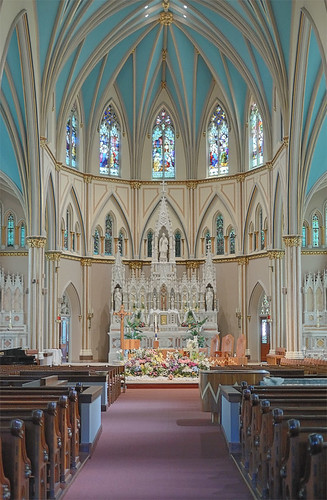
Saint Alphonsus Liguori Roman Catholic Church, in Saint Louis, Missouri, USA - nave

The church appears to be nearly identical to when I last visited.

Saint Alphonsus Liguori Roman Catholic Church, in Saint Louis, Missouri, USA - sanctuary

The altar is made of wood and is in the middle of the transept; here it is decorated for the feast of the Resurrection of Our Lord.

The ordering of the sanctuary and baptismal font appear to be based on the USCCB document Art and Environment in Catholic Worship.

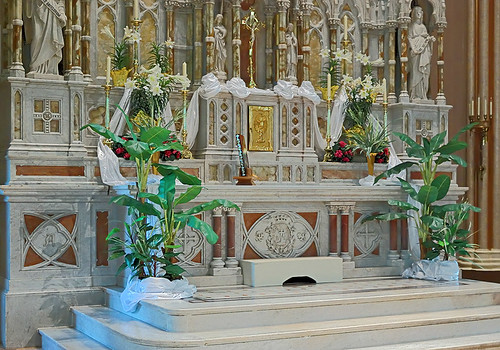
Saint Alphonsus Liguori Roman Catholic Church, in Saint Louis, Missouri, USA - tabernacle and high altar

The tabernacle is placed in the center of the old high altar.

I neglected to bring my camera's tripod on this trip, so I had to hand-hold the camera, making these photos somewhat blurry.

Saint Alphonsus Liguori Roman Catholic Church, in Saint Louis, Missouri, USA - shrine of Our Mother of Perpetual Help

This shrine of Our Mother of Perpetual Help. The devotion has Redemptorist roots, and that religious order still staffs this church.

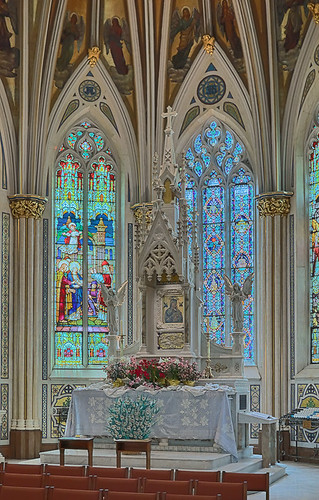
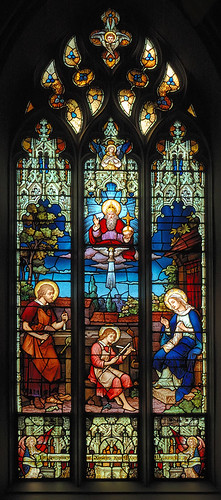
Saint Alphonsus Liguori Roman Catholic Church, in Saint Louis, Missouri, USA - stained glass window of the Holy Family

Stained glass window of the Holy Family.

For more information, and for photos dating from my 2007 pre-fire visit, please click here. Those photos are featured in the book Catholic St. Louis: A Pictorial History, and on a segment of the KETC television show Living St. Louis.

Friday, April 16, 2010

Vocations Card

FROM A PRAYER CARD found at Saint Francis Xavier Church in Saint Louis:
I am tempted to return home so that I would scream like crazy in the Sorbonne and the other universities of Europe that thousands upon thousands and millions upon millions are waiting to hear God's Word - and I felt that not one student was willing to say as Samuel did: “Here I am Lord. What do you want me to do?”

- St. Francis Xavier in a letter to St. Ignatius Loyola

Gracious God, give to the Society of Jesus men who are on fire for Christ and desire in all things to love and to serve.

www.BeAJesuit.org
A Jesuit friend tells me that the local province of the Society now has more young scholastics then they have had for decades.

The Jesuits were the premier religious order of the Counter-Reformation. The Society of Jesus ought to be better understood as the Company of Jesus, with ‘company’ being a military unit. So in its original charism, the Society was very much a part of the Church Militant. Their evangelization was typically aimed at the top of society, evangelizing Kings and the ruling class, both in Europe and worldwide, and in this mission the Society founded many universities. And Jesuits proved themselves with great courage, risking their lives in evangelization much as a soldier risks his life in battle.

But the Counter-Reformation ended with the Second Vatican Council, and so the Jesuits went into decline as confusion developed about their charism.  The Counter-Reformation was aimed against Protestantism, but the pro-life movement, unforeseen by the Council, proved that faithful Protestants could be allies with Catholics in the world; however the Council was indeed prescient in that it foresaw that that the greatest challenge to the Gospel was not small heretical sects, but rather the widespread secularization of society. This next phase in the evangelization of the world has yet to get a name, but certainly the Jesuits can forcefully participate, even as the Benedictines have thrived beyond the Dark Ages.

Here are characteristics of Jesuit life:
— They take vows of poverty and obedience but not stability; an individual Jesuit owns nothing, and lives and works where he is told.
— They live in community, but do not pray in community. The Divine Office is prayed privately and there is no distinctive Jesuit ritual or liturgy.
— No distinctive habit. They wear the dress of the local diocesan clergy.
— Jesuits take vows of chastity and cannot marry, and must not form romantic relationships; however, they are not cloistered and instead live in the world.
— Jesuits are typically learned professionals and are assigned work by their superior.

Thursday, April 15, 2010

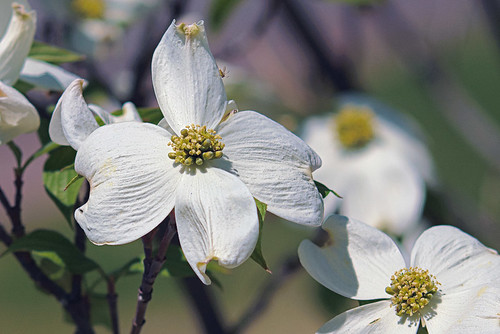
Dogwoods in bloom

dogwood blossom

Dogwood in bloom; photo taken yesterday.

The Flowering dogwood, Cornus florida, is the Missouri state tree, and its native range extends eastward from the Great Plains, from Toronto to central Florida. The name ‘dogwood’ is a corruption of ‘dagwood’: the wood of Cornus species is very hard and dense, and was used to make daggers or skewers for cooking, as well as golf club heads, tool handles, and arrow shafts. Its was also used as a substitute for quinine and for making scarlet dyes. Another name for this is whippletree, as found in Chaucer. The ends of the flower petals are ragged and sometimes red in color, and so this flower is a symbol of the Crucifixion.

Wednesday, April 14, 2010

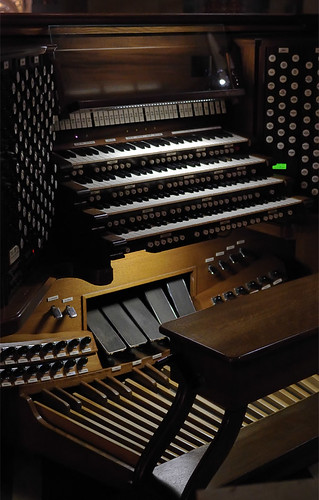
Cathedral Basilica of Saint Louis, in Saint Louis, Missouri, USA - pipe organ console

Pipe organ console, at the Cathedral Basilica of Saint Louis.

Photos of the Compton Hill Water Tower

ON APRIL 3rd, I went on a field trip with a local photography club to the Compton Hill Water Tower, located on South Grand Boulevard in Saint Louis, Missouri.
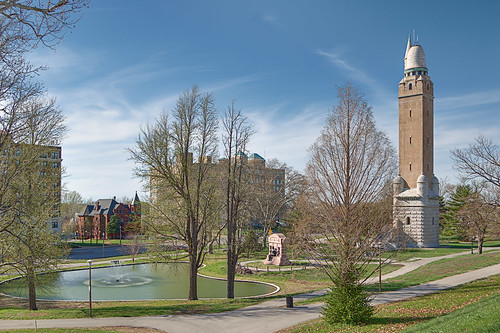
Compton Hill Water Tower, in Saint Louis, Missouri, USA - exterior of tower and view of pond

This decorative tower was used as a standpipe, regulating the uneven water pressure generated by the enormous reciprocating steam pumps used in the late 19th century. Out of hundreds originally made, only seven standpipes such as these still exist in the United States; three of them are in Saint Louis, while the most famous example is perhaps the water tower in Chicago. These were made obsolete by the use of smaller electric centrifugal pumps, which provide uniform water pressure.

I've visited this tower many times, so I hope to provide some different views.  These photos were taken with two separate cameras: my newer one has much better image quality, and the older one has a much longer telephoto lens.
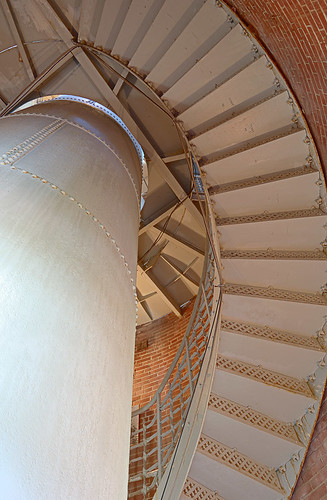
Compton Hill Water Tower, in Saint Louis, Missouri, USA - standpipe

A wrought-iron staircase winds around the standpipe. These stairs are designed to be comfortable and easy to climb, with plenty of places to stop and rest. This tower was specifically designed with the general public in mind, allowing visitors to climb to the top and enjoy the view. An older mind-set, dating from antiquity and only ending with the Victorian era, thought that public works ought to be beautiful and easily accessible to the public.
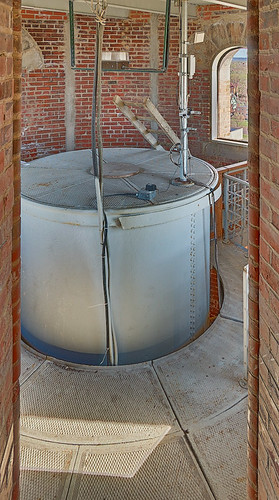
Compton Hill Water Tower, in Saint Louis, Missouri, USA - top of standpipe

The top of the standpipe. There are some modern electronics installed here.

A smaller staircase leads upward to the observation deck.
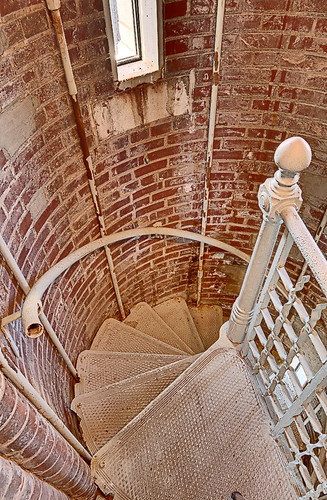
Compton Hill Water Tower, in Saint Louis, Missouri, USA - small interior stairs

Looking down those stairs.

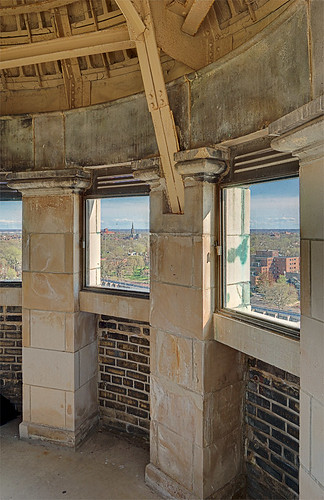
Compton Hill Water Tower, in Saint Louis, Missouri, USA - view of interior of tower

The observation deck offers a nearly 360 degree panorama of the city, and these windows open up, allowing an unobstructed view.

The tower is open to the general public on the first Saturday of each month from April to November from noon until 4 p.m. The $5 admission fee pays for the upkeep of the tower.
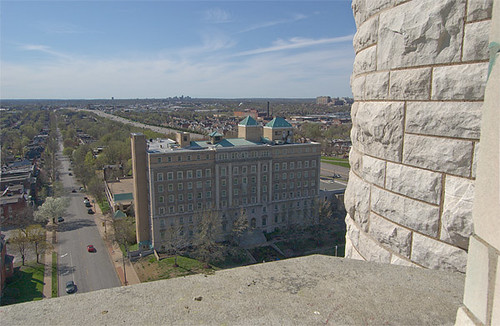
Compton Hill Water Tower, in Saint Louis, Missouri, USA - view of hospital

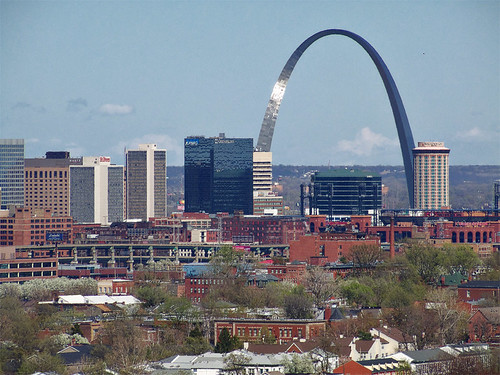
Compton Hill Water Tower, in Saint Louis, Missouri, USA - downtown Saint Louis with the Gateway Arch

Downtown Saint Louis, showing the Gateway Arch and the new Busch Stadium.
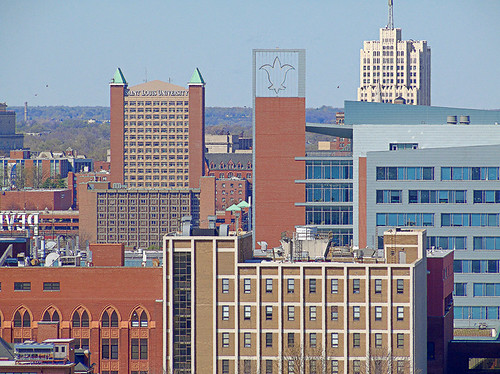
Compton Hill Water Tower, in Saint Louis, Missouri, USA - view of Saint Louis University

Saint Louis University, founded in 1818, and led by the Society of Jesus.
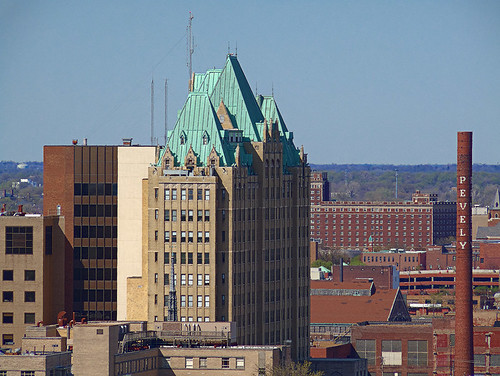
Compton Hill Water Tower, in Saint Louis, Missouri, USA - old Firmin Desloge Hospital

The former Firmin Desloge Catholic hospital. The chapel there was designed by Ralph Adams Cram and is featured in the book Catholic St. Louis: A Pictorial History.
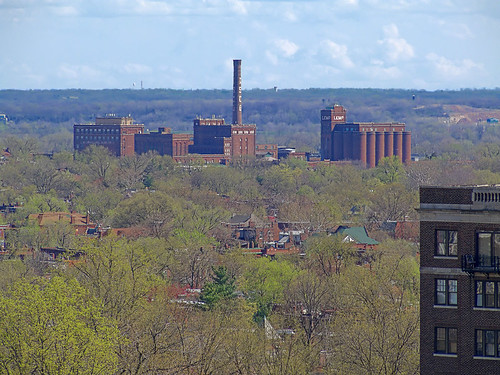
Compton Hill Water Tower, in Saint Louis, Missouri, USA - old Lemp brewery

The old Lemp Brewery, closed down with Prohibition.
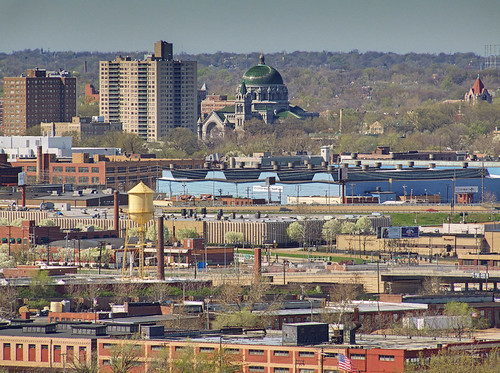
Compton Hill Water Tower, in Saint Louis, Missouri, USA - view of the Cathedral Basilica of Saint Louis

Beyond an industrial district is the magnificent Cathedral Basilica of Saint Louis.
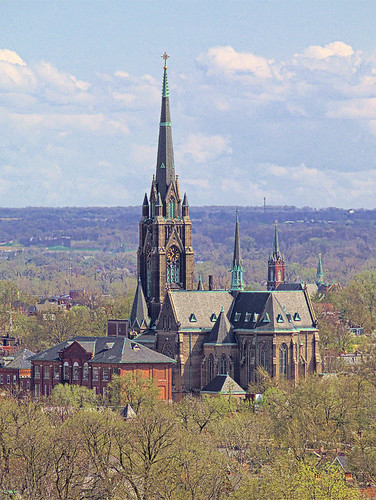
Compton Hill Water Tower, in Saint Louis, Missouri, USA - Saint Francis de Sales Oratory

Saint Francis de Sales Oratory, home of an apostolate of the Institute of Christ the King Sovereign Priest.
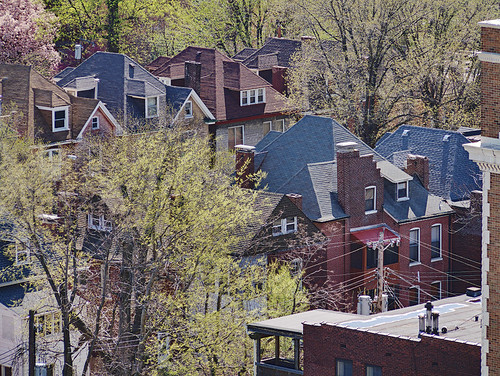
Compton Hill Water Tower, in Saint Louis, Missouri, USA - Roofs of nearby homes

Rooftops of some homes in the neighborhood.
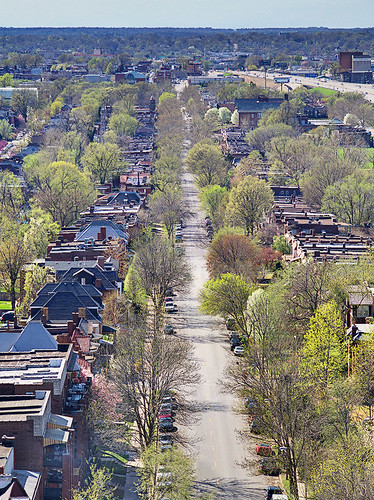
Compton Hill Water Tower, in Saint Louis, Missouri, USA - View down Shaw Boulevard

A view along Shaw Boulevard. I like the pale green of the new leaves on the trees.
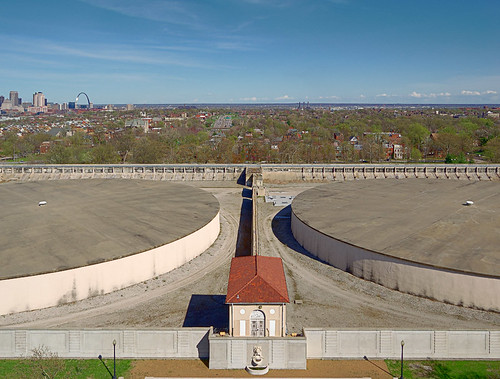
Compton Hill Water Tower, in Saint Louis, Missouri, USA - view of reservoir tanks

Compton Hill is one of the highest points in the city, and at its peak is a water reservoir. For a while, the basin was an uncovered pool; later, it was covered and had public tennis courts on top. Now, new cylindrical water tanks are hidden behind the decorative walls.

Compton Hill Water Tower, in Saint Louis, Missouri, USA - view looking down from outside of the tower

Looking down the tower. Your devoted blogger has little fear in doing what is needed to take pictures for you.
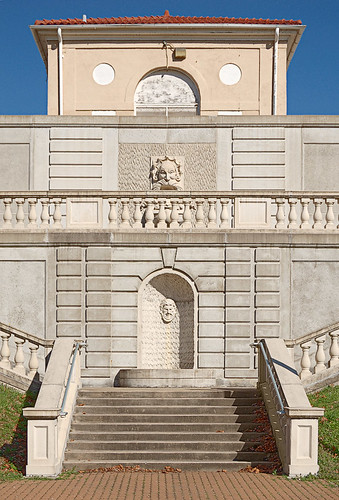
Compton Hill Water Tower, in Saint Louis, Missouri, USA - reservoir stairs

Back down on ground level, a view of the nicely ornamented reservoir.
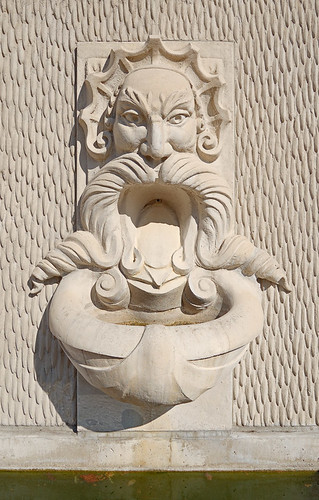
Compton Hill Water Tower, in Saint Louis, Missouri, USA - decorative fountain on reservoir

A decorative fountain on the reservoir wall.

Website of the Water Tower and Park Preservation Society: http://www.watertowerfoundation.org

Click here for my older photos from the tower.