Pages

Sunday, August 08, 2010

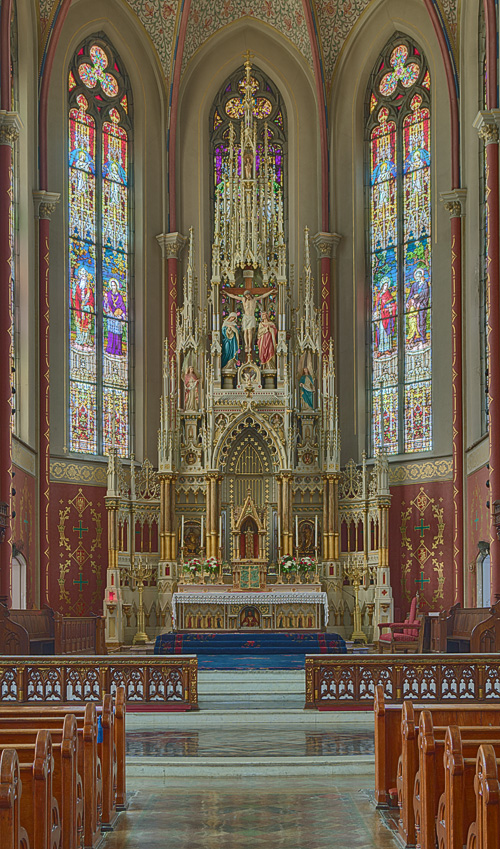
High Altar

Saint Francis de Sales Oratory, in Saint Louis, Missouri, USA - high altar

High altar, at Saint Francis de Sales Oratory, in Saint Louis, Missouri.

Tuesday, August 03, 2010

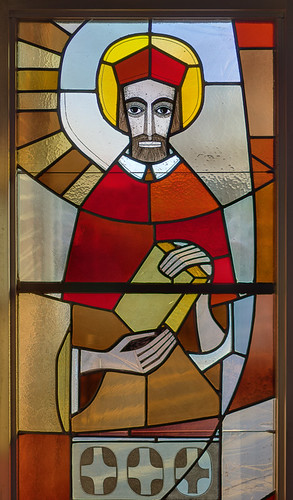
Stained Glass Window of Saint Robert Bellarmine

Saint Robert Bellarmine Roman Catholic Church, in Saint Charles, Missouri, USA - stained glass window of Saint Robert Bellarmine

A stained glass window of Saint Robert Francis Romulus Cardinal Bellarmine, at Saint Robert Bellarmine Church, in Saint Charles, Missouri. The church dates from 1965.

Saint Robert (1542-1621) was a Jesuit, and is one of the great figures of the Catholic Counter-Reformation. His teachings on the theological problems of Reformation has earned him the title of Doctor of the Church.

He was also involved with the Galileo case, and Bellarmine was a friendly correspondent with that scientist.
Pink flowers

Sunday, August 01, 2010

“The angels are lost in perpetual contemplation of an infinite glory”

A thought transfixed me: for the first time in my life I saw the truth as it is set into song by so many poets, proclaimed as the final wisdom by so many thinkers. The truth — that love is the ultimate and the highest goal to which man can aspire. Then I grasped the meaning of the greatest secret that human poetry and human thought and belief have to impart: The salvation of man is through love and in love. I understood how a man who has nothing left in this world still may know bliss, be it only for a brief moment, in the contemplation of his beloved. In a position of utter desolation, when man cannot express himself in positive action, when his only achievement may consist in enduring his sufferings in the right way — an honorable way — in such a position man can, through loving contemplation of the image he carries of his beloved, achieve fulfillment. For the first time in my life I was able to understand the meaning of the words, “The angels are lost in perpetual contemplation of an infinite glory.”
— Viktor Frankl, from the book Man's Search for Meaning.

Frankl was a Viennese Jewish psychiatrist who was imprisoned in a Nazi concentration camp during World War II. He noticed that although many were killed by that brutal regime, many people simply lost the will to live, because their lives became empty and meaningless. Although he was an Existential philosopher, and he was not a Christian, Frankl still discovered truths well-known in the Catholic Church: particularly the value of redemptive suffering, the power of compassion — helping someone else bear their cross thereby suffering with them, and the necessity of an interior, contemplative life.

He also noticed that there are really only two races of men: those who are decent and principled, and those who are unprincipled and cruel. Both kinds of men can be found in all nations, ethnicities, social classes, political parties, and levels of power. This throws secular thinking on its head.