A MOTHER'S LAMENT over the slaughter of the innocent children by King Herod, for the feast day of the Holy Innocents:
Saturday, December 28, 2013
Coventry Carol


Thursday, December 12, 2013
Friday, November 29, 2013
Photos of Saint John the Evangelist Church, in Paducah, Kentucky
HERE ARE PHOTOS of Saint John the Evangelist Church, located in the historic town of Paducah, in the western part of the Commonwealth of Kentucky. It is about 180 highway miles southeast of downtown Saint Louis, and is a part of the Diocese of Owensboro.
The town of Paducah was named by famed explorer William Clark after the Comanche tribe, then known by some other tribes as the Padoucas.
I visited Paducah a while back because I was accompanying a lady friend who wanted see the National Quilt Museum, located in that town near the riverfront. I will give a few thoughts on the museum on another posting.
We arrived at sunset, and though we had a long drive back to Saint Louis, I wanted to take some good photos of this church:
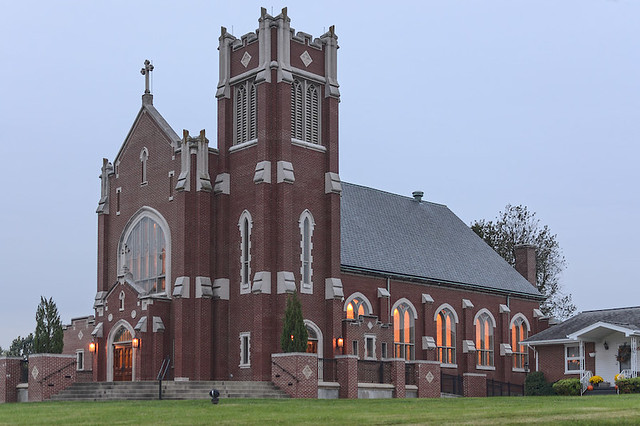
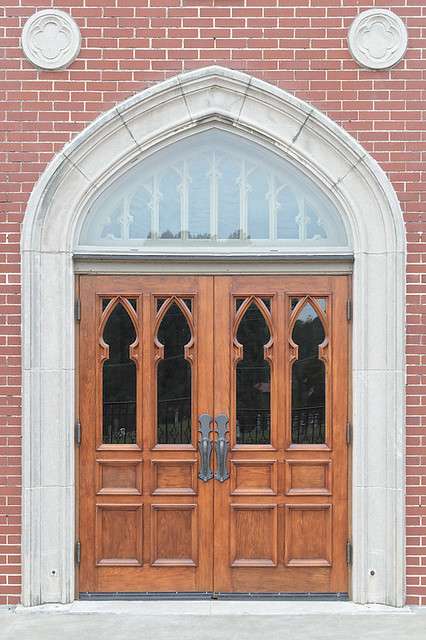
The church is Gothic revival, in the manner of the late Gothic style.
The Dioecesis Owensburgensis was erected in 1937 from land taken from the Diocese of Louisville, and its current ordinary is Bishop William Francis Medley. This diocese, along with the dioceses of Covington, Knoxville, Lexington, Memphis, and Nashville, is suffragan to the Archdiocese of Louisville — originally the Diocese of Bardstown. This is the Church in Tennessee and Kentucky.
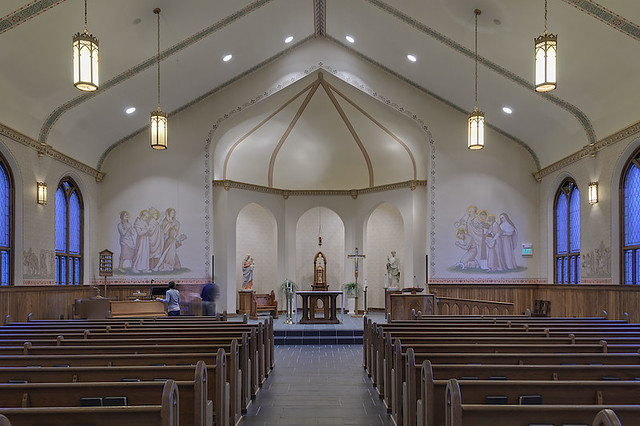
The nave of the church. Musicians are seen here preparing for Holy Mass.
From a history found on the church’s website:
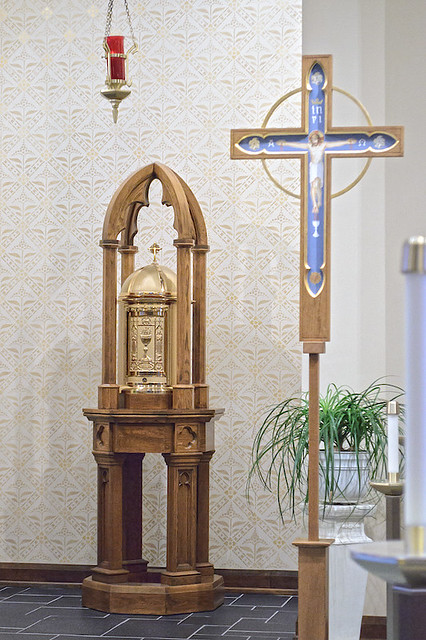
The tabernacle and crucifix.
The history continues:
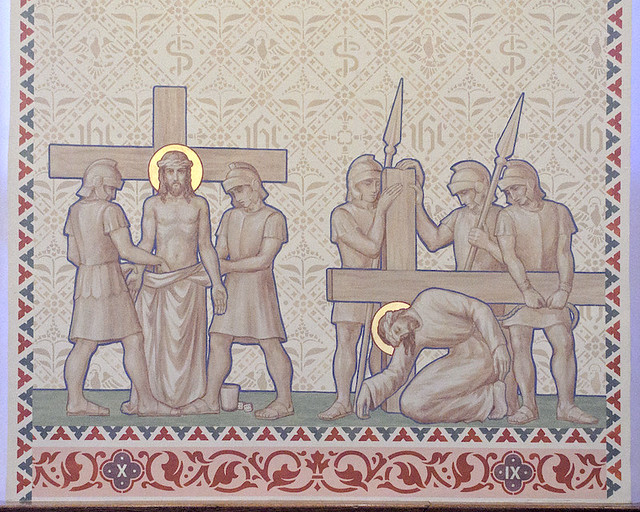
Two of the Stations of the Cross — Jesus Falls the Third Time on the right, and Jesus is Stripped of His Garments on the left.
Ornamentation in architecture has been largely a lost art since the popularization of the ideas found in Adolf Loos’ lecture of 1910, Ornament and Crime, where he claimed that the ornamentation of architecture was like the tattoos on degenerates and criminals of his age. But there is little that we need to take from the polemic of that “grumpy Marxist” other than his observation that ornament can make a building obsolete faster, as it goes out of style. True — what’s “up-to-date” is soon out-of-date — but if good taste and classic styling is used, then we needn’t worry about something going out of style any time soon — for it already is of the ages. This is the aim of the new American school of ecclesiastical architecture, coming out of the University of Notre Dame.
I particularly like the simple yet symbolic ornament depicted in this photo, behind the figures of Christ. We see a serpent and a sword, symbolizing the two failed martyrdoms of Saint John, who unlike all of the other Apostles lived to a ripe old age. We also see St. John’s symbol of the eagle, the Greek monogram for Christ, ιηϲ, and some vegetative ornament.
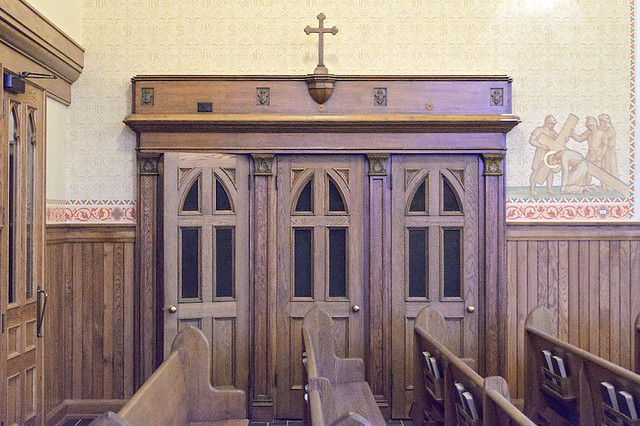
Confessional.
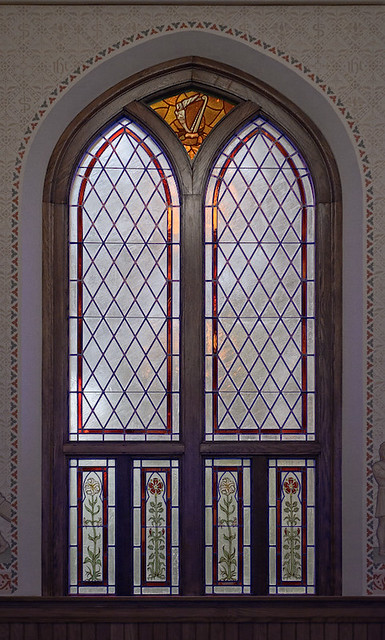
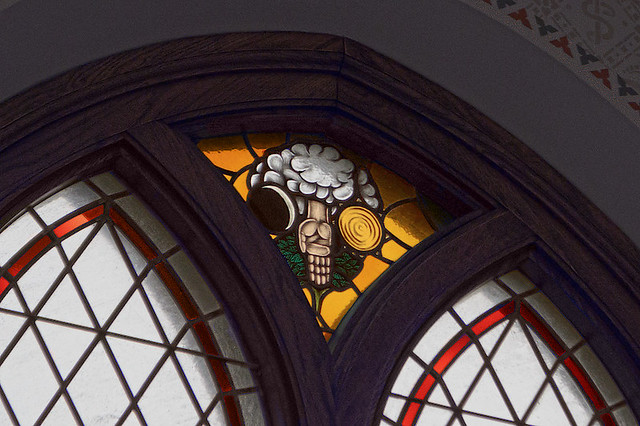
The blue light of dusk, mixed with the fluorescent lighting inside of the church confused my camera, as we can see in the photo of the nave above. Here I color-corrected this window to make it appear more natural. The windows here are largely simple — here we see some floral ornament along with a harp — a symbol of King David the Psalmist.
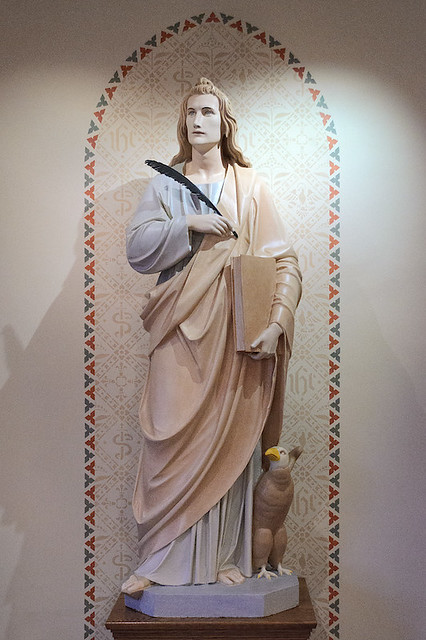
A sculpture of Saint John in the narthex. We see him here with a quill and book, symbolizing the Gospel he wrote; said Gospel is so full of soaring theology that the Fathers of the Church assigned him the symbol of the eagle. Artistic depictions of several of the Saints of the ancient church have distinctive facial features, which can be traced back to the earliest of sources. John is here depicted as a beardless youth.
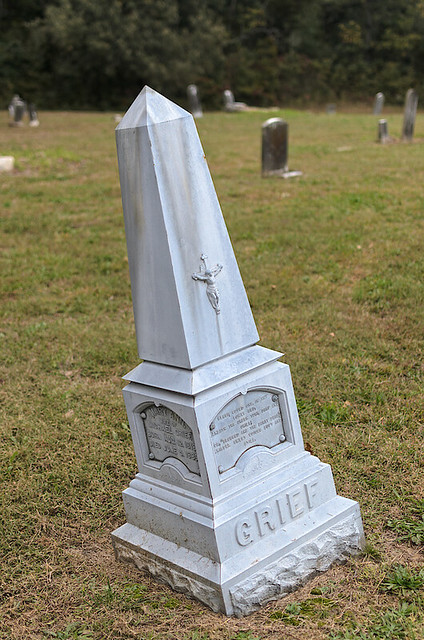
Grief.
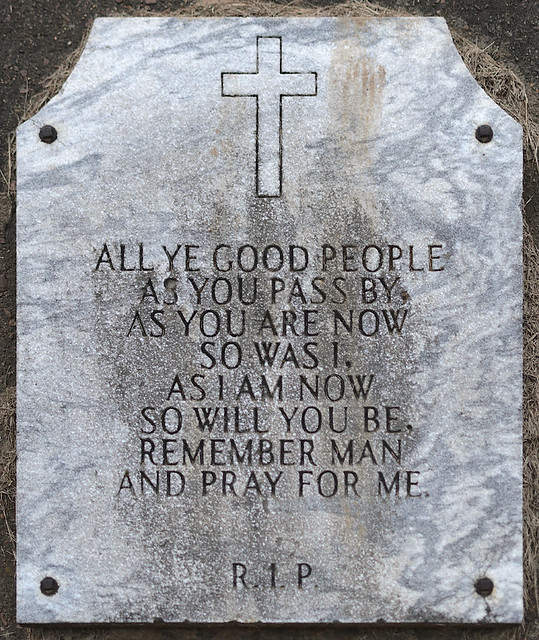
Two cemeteries are found outside of the church — this is from the older one, located across the street from the church.

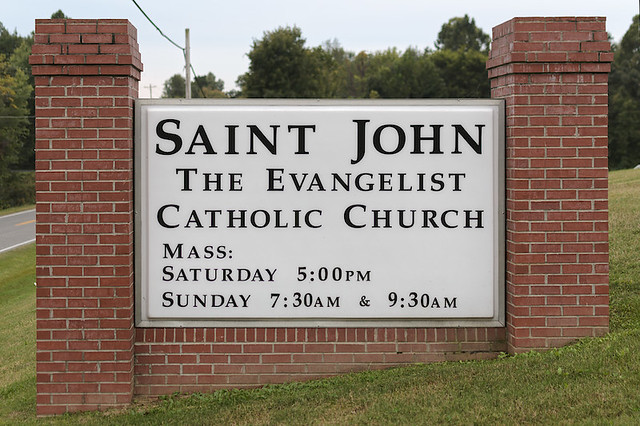
The school.
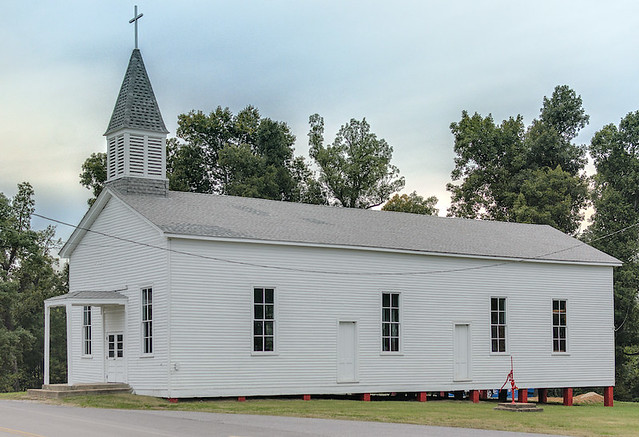
The old frame church?
The town of Paducah was named by famed explorer William Clark after the Comanche tribe, then known by some other tribes as the Padoucas.
I visited Paducah a while back because I was accompanying a lady friend who wanted see the National Quilt Museum, located in that town near the riverfront. I will give a few thoughts on the museum on another posting.
We arrived at sunset, and though we had a long drive back to Saint Louis, I wanted to take some good photos of this church:
The church is Gothic revival, in the manner of the late Gothic style.
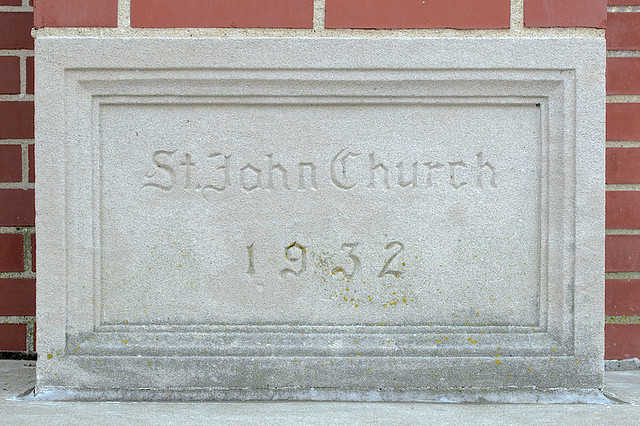
St. John Church
1932
1932
The Dioecesis Owensburgensis was erected in 1937 from land taken from the Diocese of Louisville, and its current ordinary is Bishop William Francis Medley. This diocese, along with the dioceses of Covington, Knoxville, Lexington, Memphis, and Nashville, is suffragan to the Archdiocese of Louisville — originally the Diocese of Bardstown. This is the Church in Tennessee and Kentucky.
The nave of the church. Musicians are seen here preparing for Holy Mass.
From a history found on the church’s website:
St. John the Evangelist Catholic Church was founded in 1839 by a group of German Catholic immigrants who had settled in Western Kentucky several years earlier. These first parishioners were visited by Fr. Elisha J. Durbin who had been assigned the missions throughout the territory that today make up the diocese of Owensboro. Fr. Durbin’s headquarters was at Sacred Heart Church, in Union County, Kentucky and his missionary duties took him to several surrounding states. Accordingly, the privilege of Mass and the Sacraments was not available to the people of the St. John community on a regular basis for some time.
The first church, a log building, was raised by the parishioners under the direction of Fr. Durbin around 1849. The log church burned and was replaced by a larger frame structure in 1869 under the direction of Fr. Peter Haeseley. The frame church was used for sixty-three years, until the construction of the present church building in 1932-1933 during the pastorate of Fr. Paul Barrett. All three churches were located on the same site.
The tabernacle and crucifix.
The history continues:
Few changes occurred to our church since 1933. The main update occurred in the 1960’s following Vatican II which included the removal of the tall canopy and the high altar.
In 2003, with guidance from Fr. Bruce McCarty, the parish undertook a general renovation project consisting of substantial exterior and interior repairs and a general updating of building systems. It also included the construction of an addition to include handicapped accessible restrooms, a reconciliation room and sacristy. A concerted effort was made to maintain and enhance the architectural and artistic integrity of the structure while bringing it in line with the liturgical needs of a 21st century parish.
On February 19, 2006, a Mass of Thanksgiving and Dedication of Altar was held with The Most Reverend John J. McRaith, Bishop of Owensboro, as celebrant.
Two of the Stations of the Cross — Jesus Falls the Third Time on the right, and Jesus is Stripped of His Garments on the left.
Ornamentation in architecture has been largely a lost art since the popularization of the ideas found in Adolf Loos’ lecture of 1910, Ornament and Crime, where he claimed that the ornamentation of architecture was like the tattoos on degenerates and criminals of his age. But there is little that we need to take from the polemic of that “grumpy Marxist” other than his observation that ornament can make a building obsolete faster, as it goes out of style. True — what’s “up-to-date” is soon out-of-date — but if good taste and classic styling is used, then we needn’t worry about something going out of style any time soon — for it already is of the ages. This is the aim of the new American school of ecclesiastical architecture, coming out of the University of Notre Dame.
I particularly like the simple yet symbolic ornament depicted in this photo, behind the figures of Christ. We see a serpent and a sword, symbolizing the two failed martyrdoms of Saint John, who unlike all of the other Apostles lived to a ripe old age. We also see St. John’s symbol of the eagle, the Greek monogram for Christ, ιηϲ, and some vegetative ornament.
Confessional.
The blue light of dusk, mixed with the fluorescent lighting inside of the church confused my camera, as we can see in the photo of the nave above. Here I color-corrected this window to make it appear more natural. The windows here are largely simple — here we see some floral ornament along with a harp — a symbol of King David the Psalmist.
A sculpture of Saint John in the narthex. We see him here with a quill and book, symbolizing the Gospel he wrote; said Gospel is so full of soaring theology that the Fathers of the Church assigned him the symbol of the eagle. Artistic depictions of several of the Saints of the ancient church have distinctive facial features, which can be traced back to the earliest of sources. John is here depicted as a beardless youth.
Grief.
Two cemeteries are found outside of the church — this is from the older one, located across the street from the church.
ALL YE GOOD PEOPLE
AS YOU PASS BY,
AS YOU ARE NOW
SO WAS I,
AS I AM NOW
SO WILL YOU BE,
REMEMBER MAN
AND PRAY FOR ME.
R.I.P.
AS YOU PASS BY,
AS YOU ARE NOW
SO WAS I,
AS I AM NOW
SO WILL YOU BE,
REMEMBER MAN
AND PRAY FOR ME.
R.I.P.
The school.
The old frame church?
Friday, November 22, 2013
The Allegory of Love
FIFTY YEARS AGO TODAY, there passed one of the greats of the 20th century. But Clive Staples Lewis’ death went largely unnoticed, lost in the traumatic events of the day. Lewis was an apologist, novelist, popular writer, and essayist, beloved of Christians of all churches, denominations, and sects; but he was also an accomplished scholar.
Love and marriage are horribly confused, conflated, and misunderstood in our current age, which does not understand the forms and purposes of these things — or rather, our age doesn’t seem to understand the form and purpose of anything. It was on the topics of love and marriage that C.S. Lewis gained his academic fame, in his book The Allegory of Love: A Study in Medieval Tradition, dating from 1936. It was this book that showed that the Medieval literature on love was worthy of serious academic study: and it remains the starting point of much of contemporary scholarship.
Marriage is a human institution, closely tied to the law and specific human circumstances — but it is rooted in human nature — while love is universal. How these two things interrelate is explored in great and even shocking depth in the Medieval literature. It is said that one flaw in Lewis’ book is that he treats love as a literary phenomenon, and not as something real, which he later corrected in his more popular book The Four Loves. Another flaw in his book is his incorporation of modern literary theories, whose frameworks don’t quite fit the data, and today we likewise have ideological — Marxist, Darwinist, Postmodernist, or Calvinist — readings of the literature which might explain one or another narrow aspect of love fairly well, while failing to consider the entire whole in a satisfactory manner.
Studying Medieval love literature can be hazardous: its allegorical method can be overlooked, its explicit depictions may be shocking, its unromantic portrayals of romantic love can be disturbing, and its essential Catholicity is rejected by contemporary conservatives and liberals alike. But Lewis was onto something: understanding love in all of its aspects is of great value to us today, and in every age.
Thursday, November 21, 2013
Newsletter from the Oratory
|


Subscribe to:
Posts (Atom)
