
Monday, June 27, 2011
Cdl. Burke's Homily at the Cathedral Basilica
Click here for Cardinal Burke's homily for Corpus Christi, at the Cathedral Basilica of Saint Louis.


Feast of Our Mother of Perpetual Help
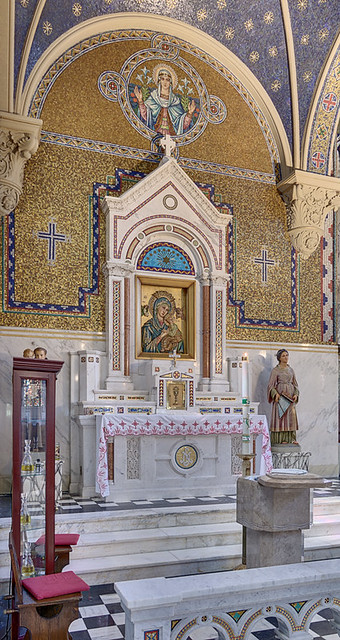
Altar with icon of Our Mother of Perpetual Help, at Saint Cecilia Church, in Saint Louis, Missouri. Photo taken in 2008.
The icon of Our Mother of Perpetual Help, also known as Our Lady of Perpetual Succor or the Theotokos of the Passion, is likely the best-known icon in the Latin Church. According to the Catholic Encyclopedia:
The picture of Our Lady of Perpetual Succour is painted on wood, with background of gold. It is Byzantine in style and is supposed to have been painted in the thirteenth century. It represents the Mother of God holding the Divine Child while the Archangels Michael and Gabriel present before Him the instruments of His Passion. Over the figures in the picture are some Greek letters which form the abbreviated words Mother of God, Jesus Christ, Archangel Michael, and Archangel Gabriel respectively. It was brought to Rome towards the end of the fifteenth century by a pious merchant, who, dying there, ordered by his will that the picture should be exposed in a church for public veneration. It was exposed in the church of San Matteo, Via Merulana, between St. Mary Major and St. John Lateran. Crowds flocked to this church, and for nearly three hundred years many graces were obtained through the intercession of the Blessed Virgin. The picture was then popularly called the Madonna di San Matteo. The church was served for a time by the Hermits of St. Augustine, who had sheltered their Irish brethren in their distress. These Augustinians were still in charge when the French invaded Rome (1812) and destroyed the church. The picture disappeared; it remained hidden and neglected for over forty years, but a series of providential circumstances between 1863 and 1865 led to its discovery in an oratory of the Augustinian Fathers at Santa Maria in Posterula.The original icon came from Crete, and has a long series of icons for its inspiration, and in turn has inspired uncountable copies and derivatives. According to tradition, the root of this artistic representation goes back to Saint Luke the Evangelist, who is said to have painted a portrait of the Blessed Virgin: this circular painting of Mary's face is found at the Abbey of Montevergine in Italy.
Artistically speaking, it is very difficult to satisfactorily compose an image of two persons together, but the many icons of the Virgin and Divine Child Jesus, such as this one, are supremely admirable for doing so in a pleasing manner.
According to Saint Alphosus Ligouri, founder of the religious order that now has custody of the original icon:
So great is the authority that mothers possess over their sons, that even if they are monarchs, and have absolute dominion over every person in their kingdom, yet never can mothers become the subjects of their sons. It is true that Jesus now in Heaven sits at the right of the Father, enjoying that distinction even as Man because of the hypostatic union with the Person of the Divine Word.Mater de Perpetuo Succursu, ora pro nobis!
He has supreme dominion over all and also over Mary; nevertheless, it can always be said that for a time at least, when He was living in this world, He was pleased to humble himself and be subject to Mary. Says St. Ambrose, Jesus Christ having deigned to make Mary His Mother, inasmuch as He was her Son, He was truly obliged to obey her. And for this reason, says Richard of St. Laurence, "Of other Saints we say that they are with God; but of Mary alone can it be said that she was so far favored as to be not only herself submissive to the will of God, but even that God was subject to her will.
Therefore we say that, even though Mary can no longer command her Son, since they are not on earth any more, still her prayers are always the prayers of a Mother and are therefore most powerful in obtaining whatever she asks.
Friday, June 24, 2011
Newsletter from the Oratory
|


Thursday, June 23, 2011
Photos at Sac Prairie
AN EXCERPT from A Summer Journey in the West, 1841, by Eliza R. Steele:
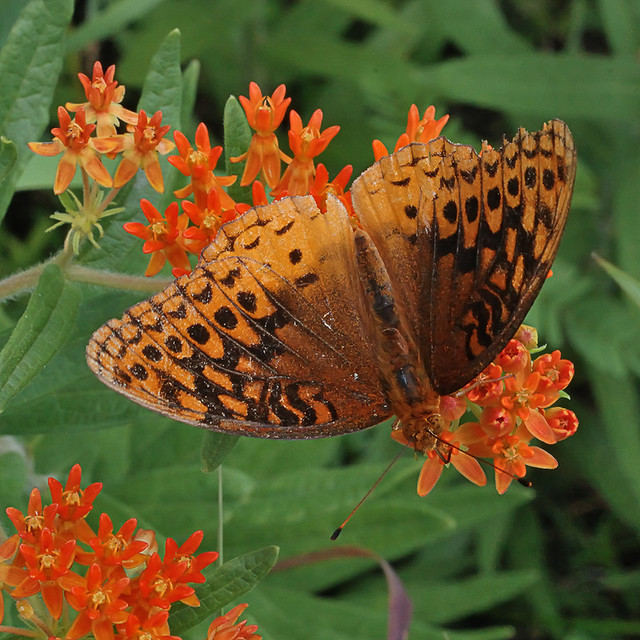
In French, the word prairie means meadow, and it was in this sense that the grasslands of the American mid-west were originally named by the colonial settlers. The Sac Prairie shown here is a meadow in the forested and rugged Lincoln Hills, an isolated Ozark-like region otherwise surrounded by flatter grassland.
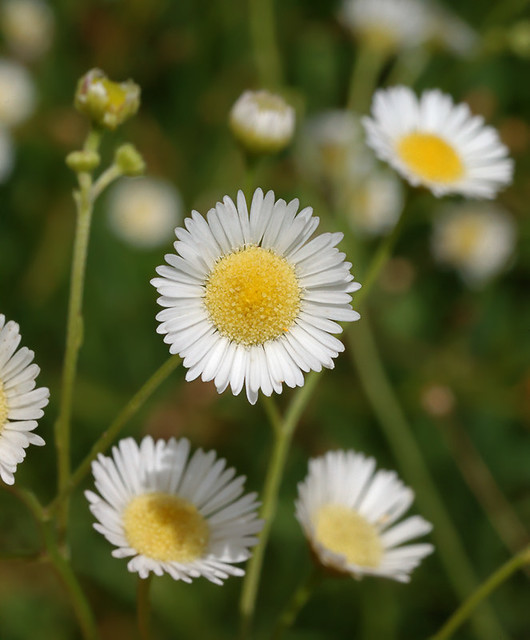
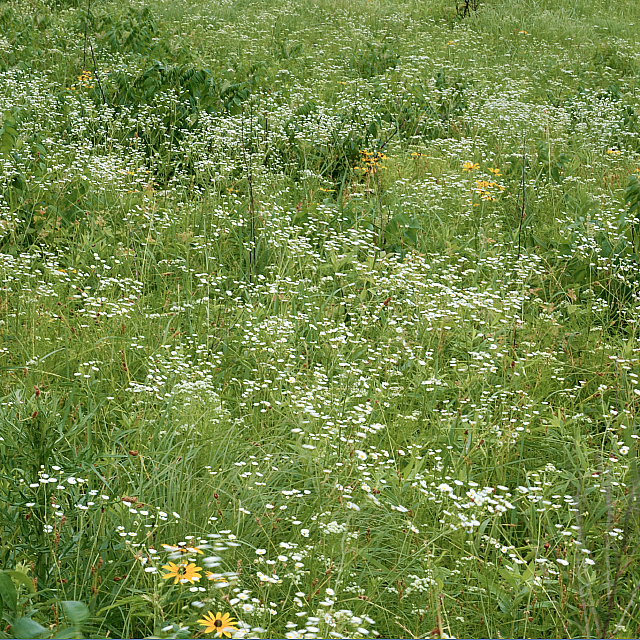
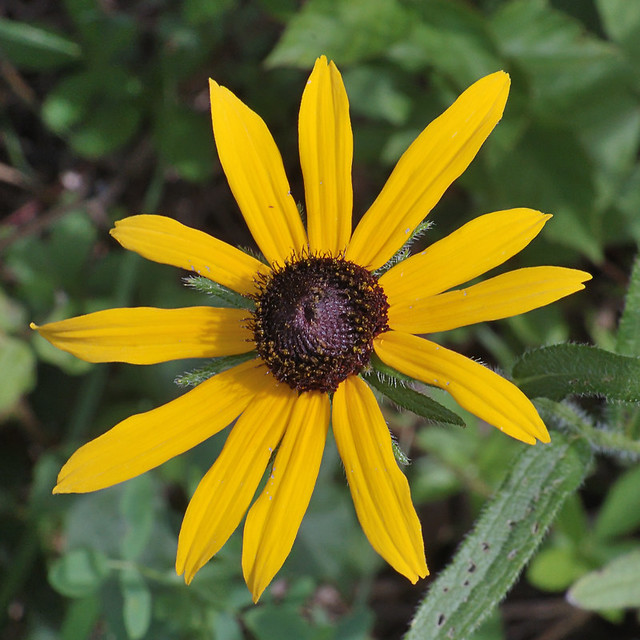
The above photos were taken at the Sac Prairie in that park, and the flower below was taken on the hillside above.
See also the article Mushrooms and Moss, which has more photos from this day.
July 7th.—I fell asleep, and when I was awakened at dawn this morning, by my companion, that I might not lose the scene, I started with surprise and delight. I was in the midst of a prairie! A world of grass and flowers stretched around me, rising and falling in gentle undulations, as if an enchanter had struck the ocean swell, and it was at rest forever. Acres of wild flowers of every hue glowed around me, and the sun arising from the earth where it touched the horizon, was 'kissing with golden face the meadows green.'* What a new and wonderous world of beauty! What a magnificent sight! Those glorious ranks of flowers! Oh that you could have 'one glance at their array!' * How shall I convey to you an idea of a prairie. I despair, for never yet hath pen brought the scene before my mind. Imagine yourself in the centre of an immense circle of velvet herbage, the sky for its boundary upon every side; the whole clothed with a radiant efflorescence of every brilliant hue. We rode thus through a perfect wilderness of sweets, sending forth perfume, and animated with myriads of glittering birds and butterflies :—The following photos were taken at Cuivre River State Park, near Troy, Missouri:
"A populous solitude of bees and birds,It was, in fact, a vast garden, over whose perfumed paths, covered with soil as hard as gravel, our carriage rolled through the whole of that summer day. You will scarcely credit the profusion of flowers upon these praries. We passed whole acres of blossoms all bearing one hue, as purple, perhaps, or masses of yellow or rose; and then again a carpet of every color intermixed, or narrow bands, as if a rainbow had fallen upon the verdant slopes. When the sun flooded this Mosaic floor with light, and the summer breeze stirred among their leaves, the irredescent glow was beautiful and wonderous beyond any thing I had ever conceived. I think this must have been the place where Armida planted her garden, for she surely could not have chosen a fairer spot. Here are
And fairy formed, and many colored things." *
'Gorgeous flowrets in the sun light shining,The gentle undulating surface of these prairies, prevent sameness, and add variety to its lights and shades. Occasionally, when a swell is rather higher than the rest, it gives you an extended view over the country and you may mark a dark green waving line of trees near the distant horizon, which are shading some gentle stream from the sun's absorbing rays, and thus, 'Betraying the secret of their silent course.' * Oak openings also occur, green groves, arranged with the regularity of art, making shady, alleys, for the heated traveller. What a tender benevolent Father have we, to form for us so bright a world! How filled with glory and beauty must that mind have been, who conceived so much loveliness! If for his erring children he has created so fair a dwelling place, how well adorned with every goodly show, must be the celestial home reserved for his obedient people. Eye hath not seen it—ear hath not heard it—nor can it enter into our hearts to conceive it. *
Blossoms flaunting in the eye of day;
Tremulous leaves, with soft and silver lining
Buds that open only to decay.' *
Wondrous truths, and manifold as wondrous,
God hath written in those stars above—
But not less in the bright flowrets under us,
Stands the revelation of his love. *
In French, the word prairie means meadow, and it was in this sense that the grasslands of the American mid-west were originally named by the colonial settlers. The Sac Prairie shown here is a meadow in the forested and rugged Lincoln Hills, an isolated Ozark-like region otherwise surrounded by flatter grassland.
The above photos were taken at the Sac Prairie in that park, and the flower below was taken on the hillside above.
See also the article Mushrooms and Moss, which has more photos from this day.
Subscribe to:
Posts (Atom)
